Leave Your Message

What Are the Best Metal Spinning Shops in China?

Choosing among the best Metal Spinning Shops in China requires more than comparing prices or polished websites. A dependable shop must prove its process through samples, inspection records, and clear communication. Look for evidence in the details: smooth aluminum surfaces, even wall thickness, clean edges, and tooling that fits the drawing without forced adjustments.

W. Edwards Deming, a respected manufacturing quality expert, said, “Quality comes not from inspection, but from the improvement of the production process.” This principle applies strongly to metal spinning. Skilled Chinese suppliers should control material flow during forming, not simply repair defects afterward. Their teams should understand alloy behavior, springback, lubrication, heat treatment, and dimensional tolerance. Ask how they manage these variables.

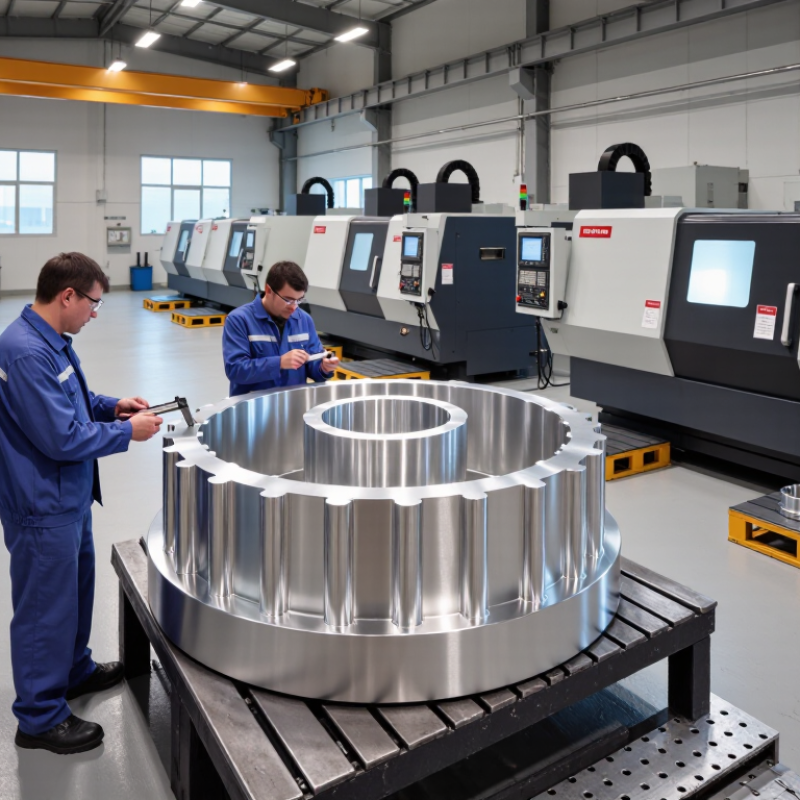
The strongest Metal Spinning Shops usually provide practical engineering support before production begins. They may review bend radii, blank diameter, tooling structure, and production volume. A factory floor should look organized, not theatrical. Machines should show maintenance records. Operators should measure parts with calipers, micrometers, or coordinate equipment. Photos help, but physical samples reveal more.

Still, no supplier is perfect. Some websites exaggerate capabilities. Some buyers also focus too heavily on low unit costs. That can create expensive problems later. A better evaluation considers consistency, response speed, corrective action, and long-term capacity. This guide compares leading Chinese shops through those real-world criteria, while recognizing an uncomfortable truth: one impressive sample does not prove stable production.
What Are the Best Metal Spinning Shops in China?

Define Metal Spinning Shops by Materials, Sizes, and ±0.1 mm Tolerances

What Are the Best Metal Spinning Shops in China?

Define Metal Spinning Shops by Materials, Sizes, and ±0.1 mm Tolerances

A capable metal spinning shop should explain its materials, diameter limits, and inspection methods clearly. Common choices include aluminum, copper, stainless steel, mild steel, and titanium. Each material behaves differently under pressure. Aluminum forms quickly but can show ripples. Stainless steel needs greater force and tighter heat control. Ask whether the shop handles prototypes, small batches, or large spun shells exceeding one meter in diameter. These services require different tooling, machines, and operator experience.

China remains a major manufacturing base. UNIDO’s 2024 industrial statistics report places China’s share of global manufacturing value added at about 31% in 2022. That scale does not guarantee precision. For ±0.1 mm requirements, request measured inspection data, not only a capability statement. ISO 2768 provides general tolerances, but it does not automatically prove that every spun feature can meet ±0.1 mm. Shops should discuss material thickness, springback, tool wear, and temperature changes. The difficult part is consistency. A perfect first sample may still hide unstable production control.

Tips: Send a drawing with datums, wall-thickness limits, and surface requirements. Request three inspection reports from separate batches. Check roundness, flange height, diameter, and thickness. Ask how often gauges are calibrated. I would also test one production lot before approving volume work. It costs more initially, but assumptions can become expensive defects.
Assess Chinese Shops Through ISO 9001, AS9100, and Process Controls

What Are the Best Metal Spinning Shops in China?

The best metal spinning shops in China should be judged by evidence, not polished websites. ISO 9001 shows whether a shop controls documents, suppliers, corrective actions, and customer feedback. Ask for the certificate scope and renewal status. A certificate covering only trading activities is not enough. Request recent process records, not general promises.

For aerospace work, AS9100 can indicate stronger risk management and traceability practices. However, certification alone does not guarantee consistent parts. Review material certificates, heat numbers, inspection plans, and nonconformance records. Check whether operators use calibrated micrometers, profile gauges, and digital measurement equipment.

Process controls should include approved work instructions, tooling checks, first-article inspection, and statistical monitoring for critical dimensions. Ask how the shop controls springback, wall thinning, and surface marks during spinning. Small details matter.

A capable team should explain its limits clearly. That honesty is useful. Some shops may have excellent forming skills but weak reporting systems. Others may produce clean reports while lacking practical tooling experience.

A sample audit can reveal both issues. Observe setup changes, part cleaning, measurement points, and how workers separate accepted parts from doubtful ones. No system is perfect. I would still compare trial results, response time, inspection data, and corrective actions before approving regular production.

Compare Equipment Capacity for Parts up to 3 m in Diameter

When comparing China’s best metal spinning shops, equipment capacity should come before price. A 3 m diameter part requires more than a large spinning lathe. Check the machine’s maximum blank diameter, usable workpiece height, spindle torque, forming force, and supported material thickness. Some workshops advertise a 3 m swing, but their practical forming diameter may be smaller. That difference matters.

Grand View Research valued the global metal forming machine market at approximately USD 15.9 billion in 2023. Its report also projects continued growth through 2030, driven by aerospace, energy, and transportation demand. These sectors expect stable wall thickness and repeatable geometry.

For large parts, ask whether the shop uses CNC-controlled spinning, hydraulic forming tools, overhead cranes, and full-size balancing equipment. A 3 m shell can weigh several hundred kilograms before machining.

Inspection capacity separates serious suppliers from capable-looking ones. The shop should measure diameter, roundness, thickness distribution, and surface defects using calibrated equipment. ISO 9001-based quality systems help, but certificates do not replace production evidence. Request recent inspection records for similarly sized parts. Ask for material certificates and forming-process data.

A practical detail is often missed. Confirm the workshop door, crane height, and loading route. A machine may accept 3 m parts, yet the factory cannot move them safely. I would also question claims based on one trial piece. Capacity is not the same as repeatability. Sometimes, the honest answer is better: the shop may need a smaller diameter, thinner gauge, or staged tooling plan.

Evaluate Quality Using CMM Inspection and Ra 1.6 μm Surface Finish

The best metal spinning shops in China should prove quality with measurable evidence, not polished photographs. CMM inspection verifies critical dimensions, including diameter, height, flange position, and concentricity. Ask for inspection reports linked to drawing numbers and revision levels. This simple traceability prevents confusion during production changes.

A reliable shop should use calibrated CMM equipment and trained inspectors. The report should show actual measurements, tolerances, and inspection dates. Surface finish requires separate attention. A CMM does not normally confirm Ra 1.6 μm. The supplier should use a calibrated roughness tester, with readings taken from defined areas and directions. Request the sampling method.

Ra 1.6 μm is practical for many spun metal components, but it is not automatically guaranteed. Tool marks, material hardness, lubrication, and final polishing can change the result. A bright surface can still fail inspection. It happens.

During supplier evaluation, send a clear drawing and request a sample inspection plan. Check whether the shop controls springback after spinning. Review material certificates, first-article results, and records for nonconforming parts. Do not rely only on a passed sample. Production consistency matters more. One weakness remains: some reports list Ra values without identifying the measurement location. That detail deserves a direct question before approval.

What Are the Best Metal Spinning Shops in China?

Evaluate quality using CMM inspection and a Ra 1.6 μm surface-finish requirement

The chart uses the ISO 2768-1 medium-class reference tolerances for linear dimensions and compares them with a 1.6 μm maximum Ra requirement. During supplier evaluation, CMM results should remain within the applicable dimensional tolerance, while surface roughness should be verified with a calibrated roughness tester. Final acceptance must always follow the engineering drawing and agreed inspection plan.

Rank Shops by Lead Time, Export Experience, and Cost Transparency

What Are the Best Metal Spinning Shops in China?

The strongest Chinese metal spinning shops should be ranked by evidence, not attractive websites. For lead time, Rank 1 belongs to workshops that confirm tooling, first-article inspection, and batch delivery dates in writing. A practical benchmark is 7–15 working days for repeat parts and 20–35 days for new tooling. These figures vary with alloy, diameter, and tolerance. They are not guarantees.

Export experience deserves equal weight. Shops handling commercial invoices, packing lists, inspection records, and sea or air freight deserve higher rankings. China’s export scale supports this assessment: WTO data recorded approximately USD 3.59 trillion in Chinese merchandise exports in 2023. The World Bank’s 2023 Logistics Performance Index ranked China 19th globally, with a score of 3.7 out of 5. Strong logistics help, but factory-level documentation still matters. Ask for anonymized export examples.

Cost transparency separates serious suppliers from risky quotes. Rank 1 shops show material grade, blank size, tooling fees, finishing, inspection, packaging, and freight as separate lines. They should also state price validity and minimum order quantity. UNIDO reported China produced about 31% of global manufacturing value added in 2023, showing deep industrial capacity, not automatic cost certainty. A low quote can hide setup charges.

I would score transparency at 35%, lead time at 35%, and export experience at 30%. That weighting may be imperfect, especially for urgent prototypes. However, it exposes a common weakness: fast delivery means little when the final invoice changes.