China has become an important manufacturing base for metal-forming equipment, including the Copper Spinning Machine. Suppliers serve cable, electrical, plumbing, automotive, and industrial component producers. Their offerings may range from compact workshop models to automated production lines with hydraulic control and digital monitoring.
This guide examines ten China-based suppliers through practical purchasing criteria. We consider machine structure, copper compatibility, spinning diameter, wall-thickness control, forming accuracy, production speed, and maintenance access. A machine that looks impressive in a catalog may perform differently on a busy factory floor. That difference matters.
Real buyer concerns receive attention. Can the supplier provide test samples? Are replacement dies available? Does the control system support clear English documentation? How quickly can engineers respond when vibration appears after installation? These questions often reveal more than a polished website.
We also review manufacturing experience, export records, technical certifications, warranty terms, and after-sales support. Certifications should be verified against the actual machine model, not accepted as decoration. Supplier rankings remain indicative, because project requirements vary widely. A small workshop may value simple controls, while an automotive plant may need robotic loading and traceable process data.
Some information may change as factories expand or product lines evolve. That limitation deserves recognition. Buyers should request current specifications, factory videos, reference projects, and a live production test before signing a contract. This article aims to provide a practical starting point, not a substitute for engineering review. Reliable decisions require careful comparison, honest communication, and attention to details that are easy to overlook.
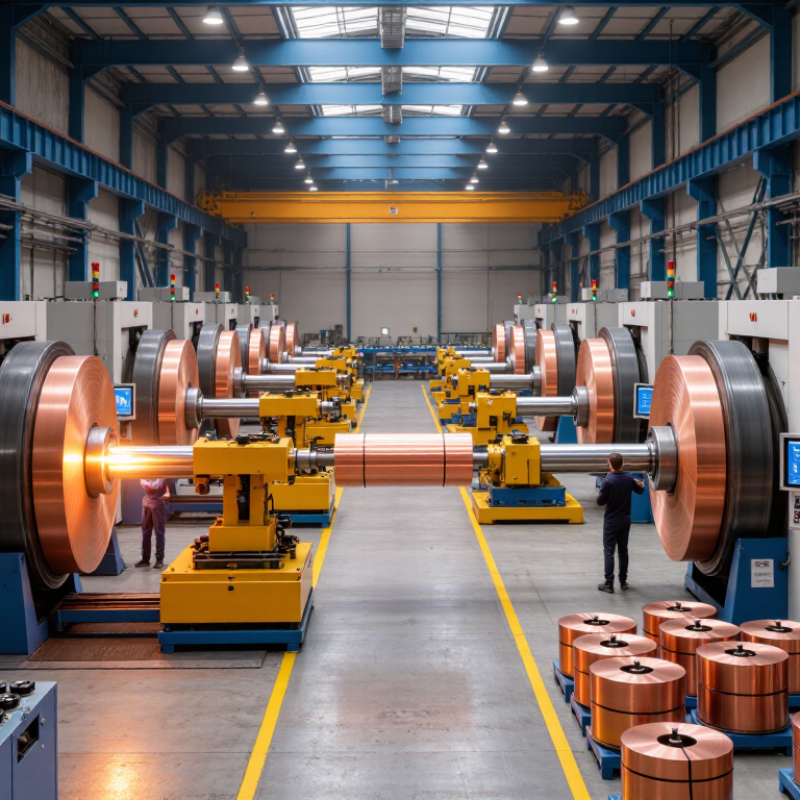
Copper spinning machines form round copper sheets by rotating a blank against a shaped mandrel. A roller applies controlled pressure, creating cups, cones, covers, and other seamless parts. The process can be manual, hydraulic, or CNC-controlled. CNC systems improve repeatability, especially when wall thickness and concentricity matter.
These machines serve electrical, lighting, HVAC, transport, and industrial equipment manufacturers. Typical parts include copper terminal covers, motor end caps, heat-transfer components, reflectors, and protective housings. Copper’s high electrical and thermal conductivity makes it valuable in power equipment and cooling systems. The USGS Mineral Commodity Summaries 2024 reported approximately 22 million metric tons of global copper mine production in 2023. The IEA’s Global Critical Minerals Outlook 2024 projects clean-energy copper demand to rise from about 5.8 million tons in 2023 to 10.2 million tons by 2035. That pressure may increase demand for efficient forming equipment.
In practice, buyers comparing China’s top 10 copper spinning machine suppliers should inspect spindle stability, roller force, tooling accuracy, and operator training. Machine capacity alone is not enough. A thin copper shell may look smooth but still contain uneven thickness. This weakness is easy to miss. Trial spinning, dimensional inspection, and material traceability provide stronger evidence than brochures. Energy use, maintenance access, and replacement-part availability also affect long-term reliability. Some factories overstate automation benefits. Human skill still influences difficult shapes, particularly during setup and tool correction.
| No. | Common Machine Configuration | Typical Copper Workpiece | Typical Diameter Range | Typical Sheet Thickness | Main Forming Method | Common Applications | Recommended Control Features |
|---|---|---|---|---|---|---|---|
| 1 | Manual or semi-automatic spinning lathe | Small bowls, covers, caps and prototypes | 100–600 mm | 0.5–2.0 mm | Single-pass or multi-pass conventional spinning | Custom fabrication, repair work and training | Variable spindle speed, adjustable tailstock and rigid tool rest |
| 2 | Hydraulic spinning machine | Medium-size cylindrical and conical shells | 300–1,500 mm | 1.0–4.0 mm | Power-assisted conventional spinning | Heat-exchanger parts, electrical enclosures and industrial covers | Programmable pressure control, overload protection and hydraulic clamping |
| 3 | CNC metal spinning machine | Repeat-production axisymmetric components | 200–2,000 mm | 0.6–5.0 mm | CNC-controlled conventional or shear spinning | Lighting reflectors, motor components and electrical hardware | Multi-axis interpolation, recipe storage and automatic tool-path control |
| 4 | Heavy-duty copper spinning machine | Large-diameter thick-wall shells and domes | 800–3,000 mm | 3.0–10.0 mm | Multi-pass power spinning | Industrial vessels, large conductors and thermal equipment parts | High-torque spindle, reinforced bed and high-capacity hydraulic tooling |
| 5 | Precision shear-spinning machine | Conical copper parts with reduced wall thickness | 250–1,200 mm | 0.8–3.0 mm | Shear spinning with controlled thinning | Conical housings, waveguide-related parts and specialized ducting | Accurate axial-force monitoring and closed-loop feed control |
| 6 | Two-roller spinning machine | Round shells, cups and symmetrical covers | 300–1,800 mm | 1.0–4.0 mm | Opposed-roller forming for improved stability | Medium-volume production of covers and conductive housings | Synchronized roller movement and automatic lubrication |
| 7 | Vertical spinning machine | Short, wide copper components | 400–2,500 mm | 1.0–6.0 mm | Vertical conventional spinning | Large covers, transformer-related parts and industrial rings | Stable workholding, overhead tooling and easy loading access |
| 8 | Horizontal CNC spinning machine | Long cylindrical copper sleeves and tubes | 200–1,500 mm diameter | 0.8–4.0 mm | CNC longitudinal and radial forming | Busbar covers, electrical sleeves and cooling-system components | Long-bed design, programmable feed rate and digital diameter control |
| 9 | Automatic loading spinning cell | High-volume stamped blanks and repeatable shells | 150–1,000 mm | 0.5–3.0 mm | Automated multi-pass spinning | Mass production of reflectors, caps and electrical covers | Robot or gantry loading, part sensing and automatic unloading |
| 10 | Hybrid spinning and trimming system | Formed copper shells requiring finished edges | 200–1,500 mm | 0.6–4.0 mm | Spinning followed by integrated trimming or beading | Lamp reflectors, protective covers and heat-transfer components | In-process measurement, programmable trimming and edge-quality monitoring |
Note: The dimensions shown are representative engineering ranges for copper spinning equipment. Actual capacity depends on copper grade, blank diameter, workpiece geometry, tooling, lubrication and machine design.
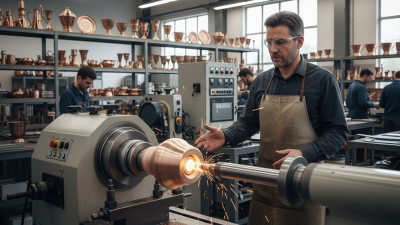
China’s copper spinning machine market is organized around several supplier layers. Machine builders design the main frame, spindle, tooling system, and control cabinet. Component specialists provide motors, drives, hydraulic units, sensors, and forming tools. System integrators then adapt these parts for cable factories, electrical equipment plants, and precision metal workshops.
The market is highly clustered, but not fully transparent. The China Machine Tool Industry Association reports steady demand for metal-forming equipment as manufacturers upgrade automation and production accuracy. Meanwhile, the International Copper Study Group forecasts global refined copper usage above 26 million tonnes annually in the current market cycle. This demand supports equipment investment, especially for repeatable forming and low-waste processing.
Supplier evaluation needs more than a catalog price. A practical audit should check spindle runout, maximum copper diameter, wall-thickness control, cycle time, and emergency service response. Ask for test pieces using similar copper grades. Examine the machine under continuous operation, not only during a short demonstration. Small details matter.
Many suppliers sell through direct factories, regional dealers, or engineering contractors. Direct factories usually offer deeper technical access. Dealers may provide faster local service. Engineering contractors can manage complete production lines, but communication may become complicated. This structure creates flexibility, yet it also creates confusion about responsibility. Some published specifications appear optimistic. Buyers should verify them with inspection records, acceptance tests, and clear warranty terms. Personally, I would treat after-sales capacity as seriously as the machine itself. A fast spindle cannot compensate for slow troubleshooting.
China’s top ten copper spinning machine suppliers reflect a broad manufacturing base, not one identical model. Their profiles typically differ by spindle capacity, forming accuracy, automation, and after-sales support. Several focus on heavy copper discs and heat-exchanger parts, while others target thin-wall tubes, electrical components, and custom prototypes. Buyers should verify these claims through factory audits and sample trials.
The International Copper Study Group reported that global refined copper usage was expected to rise by about 2.2% in 2024 and 3.5% in 2025. This demand supports investment in faster, more consistent forming equipment. Chinese suppliers increasingly offer servo-driven feed systems, programmable spinning paths, automatic lubrication, and real-time load monitoring. Practical specifications matter: repeatability, tooling life, cycle time, and scrap rates often reveal more than catalogue speed.
Some suppliers provide complete production cells, including loading, spinning, trimming, and inspection. Others remain stronger in customized machines and engineering support. That difference matters. A machine producing 0.8-millimetre copper walls may need very different control from one forming thick electrical rings. ISO 9001 certification can support process reliability, but it does not guarantee field performance. The profiles also expose a weakness: published test data is sometimes incomplete. Buyers should request measured tolerances, energy consumption, spare-part lead times, and long-run video evidence before signing a purchase contract.
Comparing copper spinning machine manufacturers requires more than checking maximum diameter. The USGS Mineral Commodity Summaries 2025 estimated global copper mine production at about 22 million metric tons in 2024. That scale increases pressure for stable, repeatable forming. Ask for rated workpiece diameter, copper thickness range, spindle speed, motor torque, and machine rigidity. A high-speed spindle is not automatically better.
For production evaluation, positioning accuracy and repeatability deserve special attention. ISO 230-2 provides methods for testing machine-tool positioning performance. Request measured results, not only catalog values. Check whether the supplier reports accuracy under load, after warm-up, and across the full working area. Also inspect hydraulic pressure stability, tool-slide travel, mandrel compatibility, and changeover time. Small gaps can become visible wrinkles on a thin copper shell.
Electrical demand matters too. Compare servo efficiency, peak power, braking control, and standby consumption. Cooling design should manage heat without contaminating the copper surface. ISO 12100 offers a useful framework for machinery risk assessment, including guarding and emergency stops. I would request sample parts made from the same copper grade and thickness. One test is insufficient. Tool wear, operator skill, and material temper can distort results, so supplier claims still need practical verification.
China Top 10 Copper Spinning Machine Suppliers
Selecting a reliable Chinese supplier requires more than comparing online prices. Define your copper wire diameter, production speed, coil size, motor capacity, and required tolerances. Ask for a complete technical sheet. Vague specifications create expensive disputes later.
Request videos of a running machine, not only polished photographs. During a factory visit, inspect the frame welds, spindle alignment, control cabinet, and emergency stop. Ask how operators replace bearings and adjust tension. A dependable supplier should provide test records, electrical drawings, spare-parts lists, and clear installation procedures. Insist on a sample run using copper wire similar to yours. Measure surface scratches, winding consistency, noise, and temperature after continuous operation.
Check the supplier’s engineering experience through verifiable customer references and export documentation. Speak with at least two previous buyers. Ask about delivery delays, software support, and warranty response times. A low quotation may exclude packaging, commissioning, training, or replacement parts. Read every line of the purchase contract, including acceptance standards and correction periods. Avoid paying the full amount before inspection. An independent pre-shipment inspection can reveal loose wiring or poor finishing.
I once treated a polished brochure as evidence. That was a mistake. Supplier comparisons remain imperfect, especially when translation hides technical details. Use bilingual drawings and written approval records. Keep a small budget for unexpected adjustments. Reliable purchasing is careful, measurable, and slightly skeptical.
This reference chart presents a practical 100-point evaluation model for comparing Chinese copper spinning machine suppliers without ranking or identifying individual companies. Buyers should give the greatest weight to machine performance, forming accuracy, material compatibility, after-sales support, and total purchase cost. Request technical drawings, test samples, inspection records, warranty terms, and installation support before placing an order.