Leave Your Message

China Top 10 Sheet Metal Machining Manufacturers

China has become a major sourcing destination for precision Sheet Metal Machining. Its manufacturers serve industries ranging from industrial equipment and automotive systems to medical devices and renewable energy. Yet choosing a reliable supplier requires more than comparing website claims or low quotations.

This guide introduces ten notable Chinese manufacturers through practical evaluation criteria. We consider fabrication experience, laser cutting accuracy, CNC bending capacity, welding quality, surface finishing, production scale, and inspection systems. Material control matters too. Stainless steel, aluminum, galvanized sheet, and mild steel each require different handling. A capable factory should explain these differences clearly.

Details reveal capability.

We also examine engineering communication, prototype support, batch consistency, packaging, lead times, and export experience. Evidence such as ISO certification, calibrated measuring equipment, traceable inspection records, and representative project experience can strengthen a supplier’s credibility. However, certification alone does not guarantee excellent parts. A factory may hold impressive certificates while struggling with drawing revisions or difficult tolerances.

That is an uncomfortable point.

The companies discussed here should not be treated as an unquestionable ranking. Supplier performance can change with management, equipment investment, workloads, and material availability. Buyers should request current samples, detailed quotations, process plans, and inspection reports before making commitments. Independent verification remains valuable.

This overview aims to provide a practical starting point for engineers, procurement teams, and product developers. It focuses on observable manufacturing strengths rather than exaggerated promises. The best partner is not always the largest factory. Often, it is the manufacturer that communicates accurately, identifies design risks early, and delivers consistent parts when production becomes demanding.
China Top 10 Sheet Metal Machining Manufacturers

Industry Scope and Evaluation Criteria for China’s Sheet Metal Machining Sector

China’s sheet metal machining sector covers laser cutting, CNC punching, bending, welding, surface treatment, and assembly. It serves industries such as industrial equipment, transportation, energy, electronics, and construction. A useful top-ten assessment should compare complete production capability, not only advertised machine counts.

Evaluation begins with material control. Reviewers should check certificates, heat numbers, thickness accuracy, and storage conditions. On the shop floor, cut edges should show limited burrs, while bent panels should maintain consistent angles and clean corners. Welding quality requires visible control of penetration, distortion, and spatter. Sample parts often reveal more than polished photographs.

Production equipment matters, but process discipline matters more. Check calibration records, inspection plans, first-article reports, and traceability from raw sheet to shipment. Useful indicators include dimensional tolerance, repeatability, monthly capacity, engineering response time, and on-time delivery. Quality systems should be verified through current documentation and practical records. A certificate alone proves little. Ask how nonconforming parts are isolated and corrected.

Cost should be assessed with tooling, finishing, packaging, and shipping included. Supplier rankings also need to consider communication, drawing interpretation, data protection, worker safety, and environmental controls. Regional logistics can affect delivery performance. Some evaluations remain imperfect because public data is incomplete. An honest review should mark uncertain evidence instead of forcing a precise score.
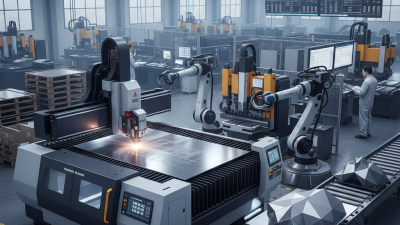
China Top 10 Sheet Metal Machining Manufacturers - Industry Scope and Evaluation Criteria for China’s Sheet Metal Machining Sector
Rank Evaluation Dimension Industry Scope Key Data or Benchmark Verification Evidence Suggested Weight
1 Manufacturing Process Coverage Laser cutting, CNC punching, bending, welding, stamping, machining, deburring, surface treatment, and assembly. A qualified full-service supplier should provide at least four core fabrication processes in-house or through a controlled production network. Equipment list, process flow charts, production photographs, and sample inspection records. 15%
2 Material Capability Carbon steel, stainless steel, aluminum alloys, galvanized steel, copper, and other engineering sheet materials. Material thickness capability commonly ranges from approximately 0.5 mm to 20 mm, depending on equipment, alloy, and process. Material certificates, approved material list, traceability procedure, and thickness capability documentation. 10%
3 Dimensional Accuracy and Quality Control Dimensional inspection, first-article inspection, process control, final inspection, and nonconformance management. Typical fabrication tolerances are project-dependent; precision work should be controlled against an agreed drawing standard such as ISO 2768 or a customer specification. Calibration certificates, inspection plans, CMM or measurement equipment records, and sample inspection reports. 15%
4 Production Capacity and Lead-Time Control Prototype, low-volume, medium-volume, and repeat production for domestic and export projects. Evaluation should compare quoted lead time, monthly capacity, shift structure, machine utilization, and contingency planning rather than relying only on equipment quantity. Capacity statements, production schedules, delivery performance data, and documented business-continuity plans. 12%
5 Engineering and Design-for-Manufacturing Support Drawing review, manufacturability analysis, bend allowance calculation, tooling advice, nesting, and engineering change control. A capable supplier should identify risks involving bend radii, hole-to-edge distance, material distortion, weld sequence, and surface-finish requirements before production. Engineering workflow, design review records, sample DFM reports, and revision-control procedures. 10%
6 Surface Treatment and Finishing Powder coating, wet painting, anodizing, plating, brushing, polishing, passivation, galvanizing, and other specified finishes. Finish performance should be assessed against the required coating thickness, color standard, adhesion, corrosion resistance, and appearance criteria. Approved finish specifications, coating thickness reports, adhesion tests, salt-spray reports where applicable, and subcontractor controls. 8%
7 Certifications and Industry Compliance Quality, environmental, occupational safety, automotive, aerospace, medical, and other sector-specific management requirements. ISO 9001 is a common quality-management baseline; ISO 14001, ISO 45001, IATF 16949, or AS9100 may be relevant to specific customer sectors. Valid certificates, certification scope, issuing-body details, expiration dates, and audit findings or corrective-action records. 10%
8 Supply-Chain and Material Traceability Supplier qualification, raw-material purchasing, batch identification, inventory control, subcontracting, and delivery management. Traceability should connect the finished part to the material batch, production order, inspection result, and applicable surface-treatment record. Purchase records, heat or batch certificates, barcode systems, approved supplier lists, and traceability samples. 8%
9 Export Readiness and Customer Service International quotation, technical communication, packaging, export documentation, logistics coordination, and after-sales support. Assessment should cover response time, English-language documentation, Incoterms knowledge, packaging validation, and corrective-action response. Sample quotations, packing specifications, shipping documents, communication records, and customer complaint procedures. 5%
10 Total Cost and Commercial Reliability Unit price, tooling, engineering charges, packaging, logistics, payment terms, warranty provisions, and long-term cost stability. The lowest quotation should not automatically receive the highest score; total landed cost, quality risk, delivery reliability, and change-control discipline should be evaluated together. Comparable quotations, cost breakdowns, payment terms, warranty conditions, contract controls, and historical delivery performance. 7%
The weighting model is an industry-focused evaluation framework for comparing China-based sheet metal machining suppliers without publishing company names or brand-specific performance data. Actual supplier rankings should be confirmed through audits, technical samples, certification checks, and verified delivery records.

Manufacturing Capabilities of China’s Top Sheet Metal Machining Companies

China Top 10 Sheet Metal Machining Manufacturers

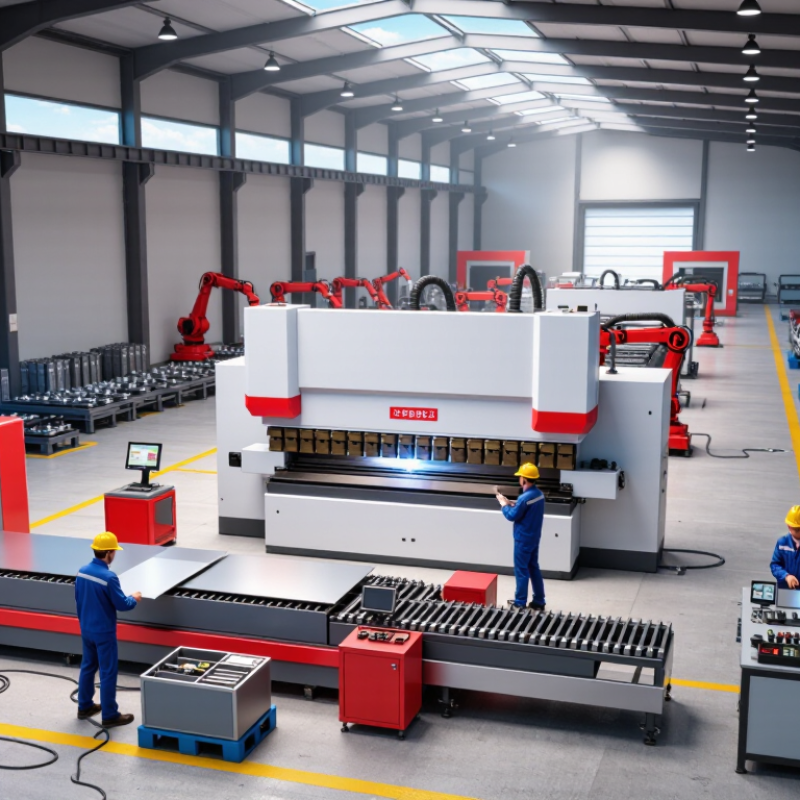
China’s leading sheet metal machining companies compete through integrated manufacturing capabilities, not low pricing alone. Their workshops commonly combine fiber laser cutting, CNC punching, press-brake forming, robotic welding, and deburring. This integration reduces handling between operations and improves repeatability for enclosures, brackets, cabinets, and industrial frames.

Automation is expanding quickly. The International Federation of Robotics reported that China installed 276,288 industrial robots in 2023, representing about 51% of global installations. This investment supports faster welding, stable cycle times, and better production records. However, automation cannot replace process knowledge. Operators still adjust bend allowances, compensate for material springback, and inspect difficult corners. Small errors remain expensive.

Material flexibility is another practical advantage. Capable manufacturers process carbon steel, stainless steel, aluminum, and galvanized sheet in various thicknesses. They also coordinate powder coating, electroplating, anodizing, and silk screening through controlled supplier networks. According to MarketsandMarkets, the global sheet metal fabrication services market is projected to grow from approximately USD 17.5 billion in 2024 to USD 24.6 billion by 2029. Demand is pushing factories toward faster quoting, digital nesting, and shorter prototype cycles.

Quality evidence matters more than factory size. Look for first-article inspection, calibrated measuring equipment, material certificates, welding procedures, and traceable batch records. ISO 9001 certification helps, but it is not proof of perfect execution. A polished audit file can still hide weak communication. The strongest suppliers connect engineering review, sampling, inspection, and corrective action in one visible workflow.

Manufacturing Capabilities of China’s Top Sheet Metal Machining Companies

The chart summarizes commonly reported capabilities across a representative group of leading Chinese sheet metal manufacturers. Values show the number of companies, out of 10, publicly indicating each capability.

Measurement: manufacturers reporting the capability in publicly available manufacturing profiles.

Regional Distribution and Specializations Among Leading Manufacturers

China’s top sheet metal machining manufacturers are spread across several industrial regions. The Yangtze River Delta is known for precision enclosures, CNC bending, and automated assembly. Its dense supplier network supports short lead times and flexible prototype production. The Pearl River Delta specializes in consumer electronics housings, commercial equipment, and high-volume fabrication. Many facilities combine laser cutting, robotic welding, and powder coating under one roof.

The Bohai Rim has strong capabilities in heavy equipment parts, electrical cabinets, and industrial frames. Manufacturers there often handle thicker steel, structural welding, and demanding surface treatments. Central and western regions are increasingly competitive in agricultural machinery, transportation components, and cost-sensitive production. Their expanding industrial parks may offer lower operating costs, although logistics can require closer planning.

Regional expertise matters, but location alone proves little. A capable supplier should provide material certificates, inspection records, and clear tolerance reports. For complex parts, buyers should review bending compensation, weld distortion control, and first-article inspection methods. Many experienced manufacturers follow documented quality systems, yet execution can vary between workshops. That is easy to overlook. Factory visits, sample testing, and process audits remain valuable before large orders. The best match depends on material, volume, tolerance, finishing needs, and delivery risk—not simply on a regional reputation.

Quality Standards, Technologies, and Production Equipment

China’s top sheet metal machining manufacturers are often judged by process discipline, not equipment size. Reliable plants follow ISO-based quality systems, controlled drawings, and documented inspection records. Operators verify material grades before cutting, because a small substitution can weaken an entire assembly.

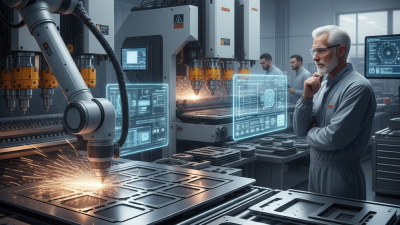
Precision begins with fiber laser cutting, CNC punching, and automated bending. These systems reduce variation across repeated parts. High-resolution scanners check flatness, hole positions, and bend angles.

Coordinate measuring machines provide stronger evidence for critical dimensions. Skilled technicians still matter. Software cannot fully detect a warped edge or an unusual surface mark.

Production equipment must also support stable finishing. Deburring machines remove sharp edges, while robotic or controlled coating lines improve surface consistency. Welding areas need calibrated power sources, fixture control, and trained inspectors. Traceability should connect each finished part with its material batch and inspection report. That builds confidence.

No factory is flawless. A missed burr can survive several checks. Humidity may affect coating results, and rushed tooling changes can create hidden distortion. Strong manufacturers investigate these failures instead of disguising them. They review root causes, update work instructions, and repeat verification. This practical honesty often separates dependable production from attractive sales claims.

How to Select a Suitable Chinese Sheet Metal Machining Manufacturer

How to Select a Suitable Chinese Sheet Metal Machining Manufacturer

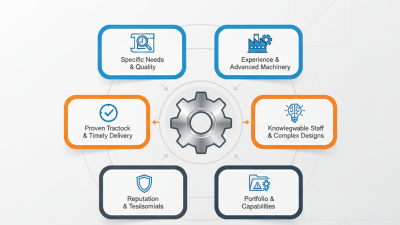
Choosing among China’s top sheet metal machining manufacturers requires more than comparing prices. Start with your drawings, material grades, thickness ranges, and required tolerances. A capable supplier should explain whether laser cutting, CNC bending, welding, or stamping fits each part. Ask for inspection records, process controls, and recent sample photos. Details matter.

Request a trial order before approving large production. Inspect hole positions, bend angles, edge quality, weld appearance, and surface treatment under clear lighting. A reliable manufacturer should provide measurement reports using calibrated equipment. Check its experience with your material, especially stainless steel, aluminum, or galvanized sheet. Production capacity also matters. A busy workshop may delay your schedule.

Communication can reveal more than a polished website. Ask how engineers handle unclear drawings, design changes, and nonconforming parts. Responses should include practical suggestions, not vague promises.

Confirm packaging, export documents, lead times, and responsibility for rework. A very low quotation deserves careful questioning. Hidden costs may appear later.

Do not select only by certification lists. Visit the facility remotely or in person, and compare actual evidence with written claims. I have learned that even careful evaluations can miss small risks, such as unstable welding quality between shifts. Build inspection checkpoints into the agreement. Clear records protect both sides and make future decisions easier.