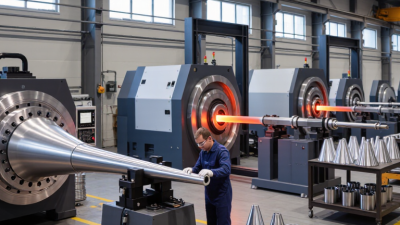
What Are China Top 10 Spinning Machining Suppliers? This question matters to buyers sourcing precise metal components for lighting, automotive, aerospace, and industrial equipment. Spinning Machining can produce circular parts with smooth walls, controlled thickness, and efficient material use. Typical products include cones, cylinders, reflectors, housings, and custom enclosures. However, supplier quality can vary significantly.
A credible supplier should demonstrate practical experience, not only attractive website images. Buyers should examine forming equipment, CNC finishing capacity, material knowledge, and inspection procedures. Useful evidence includes sample reports, dimensional records, material certificates, and clear photographs of production lines. Important details include aluminum, stainless steel, copper, and specialized alloy capabilities. Tolerance control matters, especially around openings, wall thickness, concentricity, and surface finish. Strong suppliers also explain tooling costs, prototype stages, packaging methods, and realistic production schedules.
Not every supplier suits every project. A factory with advanced machinery may still communicate poorly or struggle with small orders. Another supplier may offer competitive pricing but lack stable quality control. This ranking should therefore consider technical capability, certifications, export experience, customer support, and transparent quotations. Independent verification remains necessary. Ask for current audit documents and recent samples. Check them carefully. Production conditions can change. The final selection should match the part’s geometry, volume, material, compliance needs, and target market. This guide aims to provide a practical starting point, while acknowledging one limitation: supplier rankings are never permanently fixed. Fresh audits and direct communication remain essential before signing a purchase agreement.
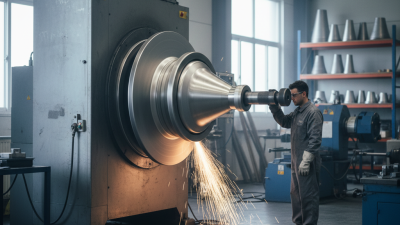
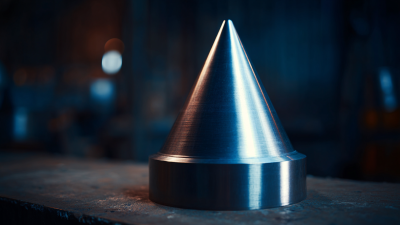
Metal spinning is a forming process that shapes a flat metal disc over a rotating mandrel. A roller applies controlled pressure while the workpiece turns. The metal stretches gradually, rather than being cut away. This creates bowls, cones, tubes, reflectors, and other rotational parts.
The process suits aluminum, stainless steel, copper, and selected high-strength alloys. It supports prototypes and small production runs because tooling costs are often lower than deep drawing. Grand View Research reports that the global metal forming machine tools market is expanding with rising aerospace, automotive, and energy demand. Data Bridge Market Research also identifies automation and precision control as major growth factors. These reports do not prove that every spinning supplier performs equally well. That distinction matters. Experienced manufacturers check wall thickness, springback, surface marks, and dimensional stability after forming. In practical work, a part may look perfect under bright light but fail a gauge test.
Tips: Ask suppliers for material certificates, inspection records, and sample measurements. Confirm the mandrel diameter, blank thickness, tolerance, and heat-treatment condition before quotation. A short trial run can reveal wrinkles or thinning that drawings cannot predict. ISO 2768 may support general tolerances, but critical spinning dimensions often require tighter, product-specific controls. According to ISO 6892-1, tensile testing also helps verify material behavior before production. Do not rely only on a polished sample. Production consistency is the harder test.
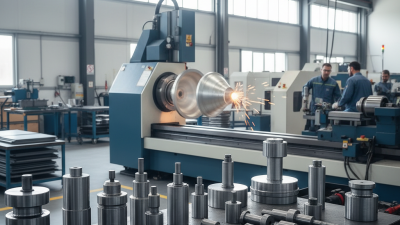
Metal spinning is a cold-forming process that transforms a circular sheet or tube blank into a symmetrical hollow component by pressing it against a rotating mandrel. It is commonly used for lampshades, pressure vessels, cookware, aerospace parts, reflectors, and industrial housings.
The chart shows approximate melting points for common metals that can be formed by spinning. Material selection depends on ductility, thickness, work-hardening behavior, tooling, and the required component geometry. These values are reference temperatures, not recommended forming temperatures.
What Are China’s Top 10 Spinning Machining Suppliers?
Evaluating Chinese spinning machining suppliers requires more than comparing quotations. Start with process capability. Ask for documented tolerances, material grades, wall-thickness control, tooling records, and recent inspection reports. A supplier should explain how it controls springback, wrinkles, cracks, and surface marks during forming.
Quality systems matter, but certificates are not enough. The ISO Survey 2023 recorded more than 1.26 million ISO 9001 certificates worldwide. That figure shows quality certification is widespread, not that every process is reliable. Request calibration records, first-article reports, corrective-action evidence, and batch traceability. Check whether inspection equipment matches your tolerance requirements. A polished certificate can still hide weak process control.
Capacity needs practical testing. Review machine diameters, forming-force limits, production speed, backup equipment, and tooling lead times. The World Economic Forum’s Future of Jobs Report 2023 estimated that 44% of workers’ core skills could change within five years. Therefore, evaluate operator training, engineering experience, and digital production records. Communication also deserves a score. Can the supplier answer technical questions clearly? Can it report a defect without delay? I would not trust photographs alone. A sample run may reveal unstable thickness, inconsistent edges, or poor packaging. Cost comparisons should include tooling, inspection, freight, rework, and schedule risk. The cheapest quote can become expensive quickly. Yet even this method is imperfect; real performance appears only after repeated batches and honest supplier reviews.
China’s top 10 spinning machining suppliers serve industries such as lighting, automotive, kitchen equipment, and industrial ventilation. They typically produce aluminum, stainless steel, copper, and mild steel components. Their capabilities often include CNC metal spinning, deep drawing, trimming, flanging, welding, and surface finishing.
A strong supplier should show practical experience with prototypes and repeat production. The leading ten usually operate modern spinning lathes, coordinate measuring machines, and automated inspection tools. They should provide material certificates, dimensional reports, and traceable production records. Some specialize in thin-wall reflectors, while others handle thicker pressure-free housings or large industrial shells. Tooling support matters too. Poor dies can create wrinkles, uneven walls, and costly delays.
Buyers should compare more than quoted prices. Ask about minimum order quantities, tolerance control, sample approval, packaging, and export experience. Reliable factories explain problems early and suggest realistic design changes. That honesty is valuable. Still, no supplier performs perfectly on every alloy or shape. Production data, independent audits, and physical samples deserve greater trust than polished claims. A careful shortlist can reveal which of China’s top 10 spinning machining suppliers truly fits the project.
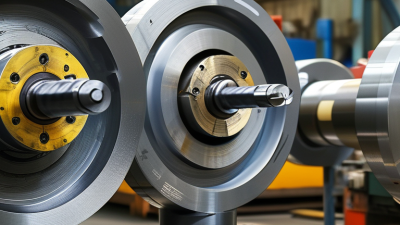
China’s leading spinning machining suppliers combine metal spinning, CNC turning, milling, and secondary fabrication. Many operate CNC lathes with automated tooling and programmable feed control. Operators can form aluminum, stainless steel, copper, and selected titanium parts with consistent wall profiles. Typical capabilities include deep drawing, flanging, trimming, drilling, welding, polishing, and surface treatment. Capability matters.
Their products support demanding industries. Aerospace companies use spun housings, ducts, covers, and lightweight structural components. Automotive manufacturers purchase reflectors, transmission parts, sensor shells, and prototype assemblies. Medical equipment producers need clean, corrosion-resistant enclosures with controlled dimensions. Energy projects often require vessels, pipe fittings, turbine covers, and heat-management components. Lighting, electronics, food processing, and industrial automation also depend on these suppliers for repeatable metal forms.
Reliable suppliers usually provide material certificates, inspection reports, process records, and sample approvals. Their quality teams may use coordinate measuring machines, roundness gauges, ultrasonic testing, and visual inspection. Experienced engineers also review drawings before production. This prevents avoidable tooling mistakes. However, no supplier performs perfectly on every project. Some handle complex stainless steel well but struggle with thin aluminum edges. Others offer excellent machining but limited finishing capacity. Buyers should compare tolerances, batch size, lead time, tooling ownership, and communication quality. A small pilot order often reveals more than a polished capability brochure.
Selecting among China’s top 10 spinning machining suppliers requires more than comparing hourly prices. Start with your drawing, alloy, diameter, wall thickness, tolerance, and annual volume. A capable supplier should explain springback control, tool design, surface protection, and inspection methods in practical terms. Ask for samples made from the same material, not a similar substitute.
The China Machine Tool Industry Association reported approximately 613,000 metal-cutting machine tools produced in 2023. This reflects strong manufacturing capacity, but capacity alone proves little. Request equipment lists, machine age, process flow, and operator experience. For thin aluminum or stainless-steel parts, check runout records and measured wall thickness at several points. A supplier using calibrated CMM, height gauges, and material certificates offers stronger evidence. According to the ISO Survey of Management System Standards, China holds more than one million ISO 9001 certificates. Certification supports process discipline, yet it does not guarantee your part will be correct.
During supplier audits, review first-article reports, nonconformance records, corrective actions, and packaging tests. Ask how they handle tool wear after repeated spinning cycles. Small details matter. Confirm lead times in writing, including tooling approval and rework responsibility. A low quotation may exclude polishing, inspection, or export packaging. That mistake becomes expensive later. I would also request a pilot batch before signing a long-term agreement. One successful sample can mislead; repeated production reveals stability. Suppliers should welcome measurable acceptance criteria, though not every factory will present its weaknesses clearly. That is where careful questions matter.
| Rank | Anonymous Supplier Profile | Typical Manufacturing Region | Primary Spinning Capability | Common Materials | Typical Diameter Range | Typical Wall Thickness | Typical Dimensional Tolerance | Usual Production Volume | Supporting Processes | Quality Evidence to Request | Typical Lead-Time Range | Best-Fit Applications |
|---|---|---|---|---|---|---|---|---|---|---|---|---|
| 1 | Supplier Profile 01 | Yangtze River Delta | CNC metal spinning | Aluminum, stainless steel, mild steel, copper | 50–1,500 mm | 0.8–6.0 mm | Generally ±0.20–0.50 mm | Prototype to 20,000 pieces | Laser cutting, welding, trimming, polishing | First-article report, material certificate, CMM or profile measurement report | 2–6 weeks after drawing approval | Lighting housings, industrial covers, cookware, reflectors |
| 2 | Supplier Profile 02 | Pearl River Delta | CNC and conventional spinning | Aluminum alloys, stainless steel, brass, titanium | 80–2,000 mm | 1.0–8.0 mm | Generally ±0.25–0.60 mm | Low to medium volume | Deep drawing, machining, anodizing, powder coating | Process control plan, hardness report, coating thickness report | 3–7 weeks after approval | Automotive components, aerospace subassemblies, enclosures |
| 3 | Supplier Profile 03 | Jiangsu and Zhejiang | Precision CNC spinning | Aluminum, stainless steel, nickel alloys | 30–800 mm | 0.5–4.0 mm | Generally ±0.10–0.30 mm | Prototype to 10,000 pieces | CNC turning, milling, deburring, surface finishing | Dimensional inspection plan, calibrated gauge records, traceability documents | 3–8 weeks after technical confirmation | Precision instruments, sensors, medical and electronic housings |
| 4 | Supplier Profile 04 | Shandong and northern China | Heavy-gauge metal spinning | Carbon steel, stainless steel, aluminum, copper | 200–3,000 mm | 2.0–12.0 mm | Generally ±0.50–1.00 mm | Small to medium batches | Rolling, welding, heat treatment, blasting, painting | Weld inspection records, material traceability, pressure or leak-test report | 4–10 weeks after order confirmation | Pressure vessels, industrial tanks, ventilation parts, machinery guards |
| 5 | Supplier Profile 05 | Fujian and coastal manufacturing areas | Decorative and functional spinning | Aluminum, brass, copper, stainless steel | 60–1,200 mm | 0.6–5.0 mm | Generally ±0.20–0.60 mm | Medium to high volume | Polishing, brushing, electroplating, anodizing, assembly | Color sample approval, surface inspection standard, batch inspection report | 3–6 weeks after sample approval | Architectural lighting, decorative hardware, consumer products |
| 6 | Supplier Profile 06 | Guangdong | Thin-wall CNC spinning | Aluminum, stainless steel, copper | 40–1,000 mm | 0.4–3.0 mm | Generally ±0.15–0.40 mm | Prototype to 50,000 pieces | Stamping, laser cutting, tapping, assembly, anodizing | Capability study, SPC records, incoming and final inspection reports | 2–5 weeks after production release | LED reflectors, electronic parts, appliance components |
| 7 | Supplier Profile 07 | Central China | Custom forming and spinning | Mild steel, stainless steel, aluminum, galvanized steel | 100–2,500 mm | 1.2–9.0 mm | Generally ±0.40–0.90 mm | Low to medium volume | Forming, welding, drilling, powder coating, assembly | Welding procedure documents, coating test results, dimensional checklist | 4–9 weeks after design freeze | Industrial equipment, ductwork, machinery components |
| 8 | Supplier Profile 08 | Yangtze River Delta | Prototype and short-run spinning | Aluminum, stainless steel, copper, brass | 50–1,000 mm | 0.8–5.0 mm | Generally ±0.20–0.60 mm | 1–5,000 pieces | Rapid tooling, CNC machining, 3D scanning, finishing | Prototype inspection report, 3D comparison data, engineering change records | 1–4 weeks for prototypes | Product development, pilot production, custom replacement parts |
| 9 | Supplier Profile 09 | Pearl River Delta | High-volume metal spinning | Aluminum, stainless steel, carbon steel | 80–1,500 mm | 0.7–6.0 mm | Generally ±0.25–0.70 mm | 10,000–100,000 pieces | Automated trimming, robotic welding, coating, packaging | Production part approval documents, sampling plan, defect-rate records | 5–10 weeks after tooling and approval | Commercial lighting, HVAC parts, appliance and automotive components |
| 10 | Supplier Profile 10 | Southwestern China | Complex-shape spinning | Aluminum alloys, stainless steel, nickel-based alloys | 60–1,800 mm | 0.8–7.0 mm | Generally ±0.25–0.70 mm | Prototype to medium volume | Multi-axis machining, heat treatment, non-destructive testing | Material traceability, heat-treatment record, NDT report, final inspection report | 5–12 weeks after technical approval | Aerospace, energy equipment, specialized industrial components |
Selection priorities should include material compatibility, forming geometry, achievable tolerances, tooling ownership, quality-system documentation, surface-finish requirements, production capacity, export experience, communication speed, and total landed cost. Exact capability must be validated against the released engineering drawing and approved sample.