2026 How to Optimize the Spinning Forming Process for Manufacturing Efficiency?
The Spinning Forming Process plays a vital role in manufacturing efficiency. This technique transforms raw materials into finished products through rotary motion. Its application spans various industries, from aerospace to automotive. Optimizing this process can lead to significant improvements in productivity and cost savings.
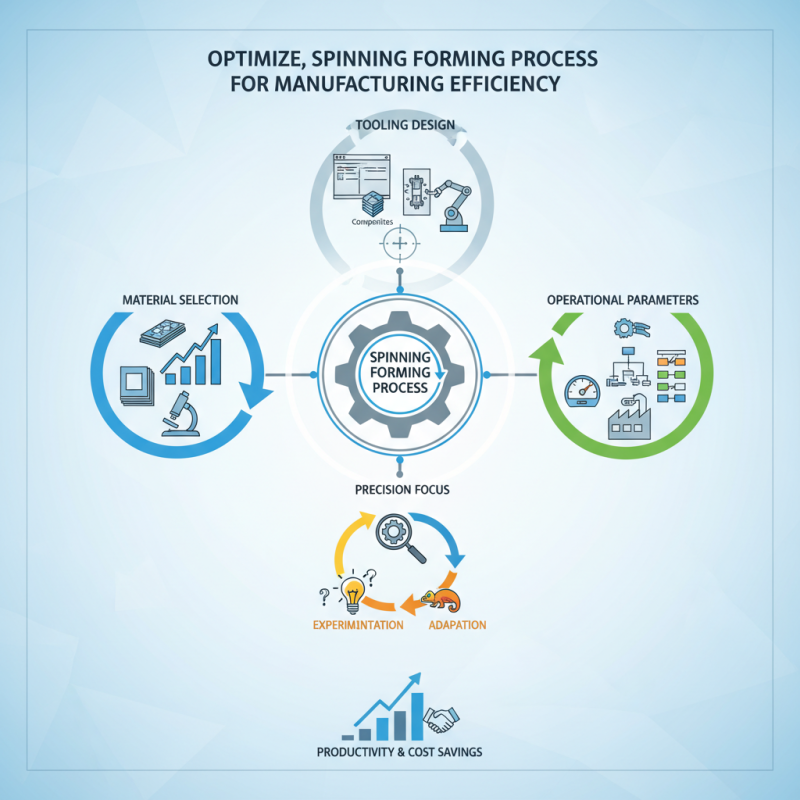
Achieving efficiency in the Spinning Forming Process isn't straightforward. Factors such as material selection, tooling design, and operational parameters all influence the outcome. Companies often struggle to find the right balance. Experimentation can result in valuable insights but may also lead to unexpected challenges.
Focus on precision is crucial. Even minor adjustments in the process can yield substantial results. However, it is essential to remain open to adaptation. Relying solely on past successes may hinder innovation. Manufacturers must assess their methods continually, embracing both achievements and setbacks.
Understanding the Basics of the Spinning Forming Process in Manufacturing
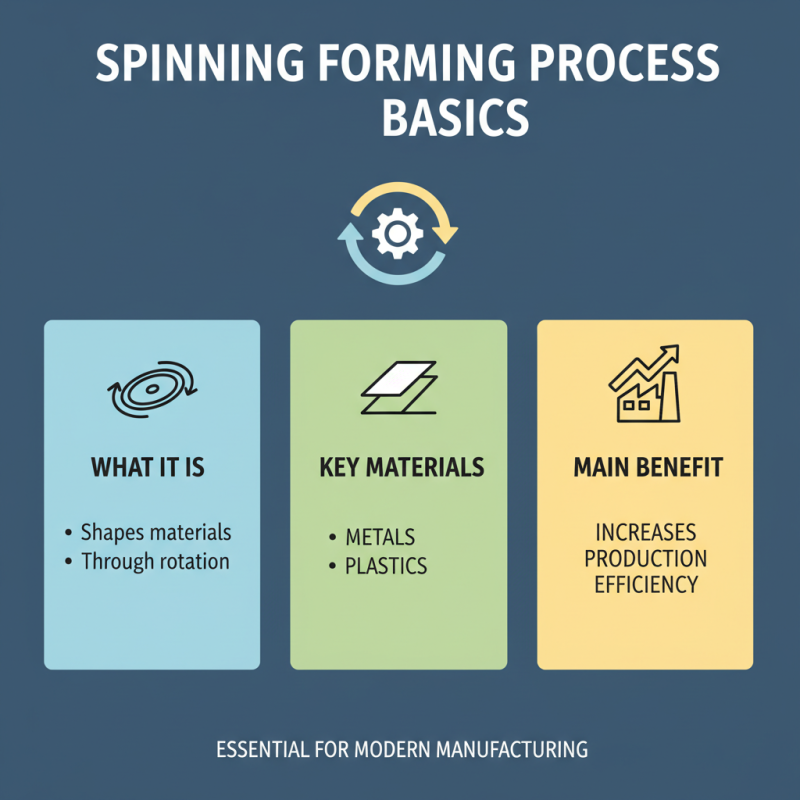
The spinning forming process plays a crucial role in manufacturing. It involves shaping materials through rotation. This technique is often used for metals and plastics. Understanding its basics can significantly enhance efficiency in production.
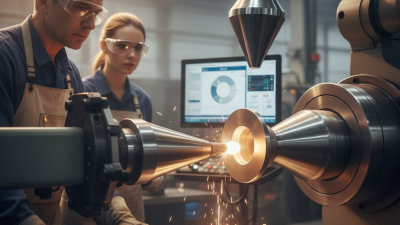
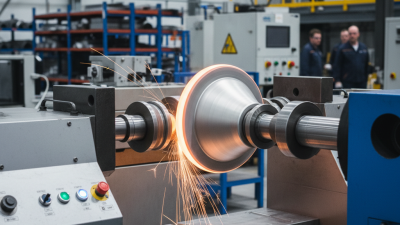
During spinning, a workpiece is mounted on a lathe. The tool moves in a circular motion, forming the material into desired shapes. This method reduces waste, as excess material is minimized. Factors such as speed and tool design affect the outcome. Many manufacturers overlook the importance of these variables. This oversight can lead to inefficiencies.
Moreover, proper setup is essential. If the material is not correctly aligned, it can cause defects. Flaws may go unnoticed until later stages of production. Regular training for operators can improve awareness of these issues. Attention to detail is key in optimizing the spinning forming process. A small adjustment can make a significant difference.
Key Factors Influencing Manufacturing Efficiency in Spinning Forming
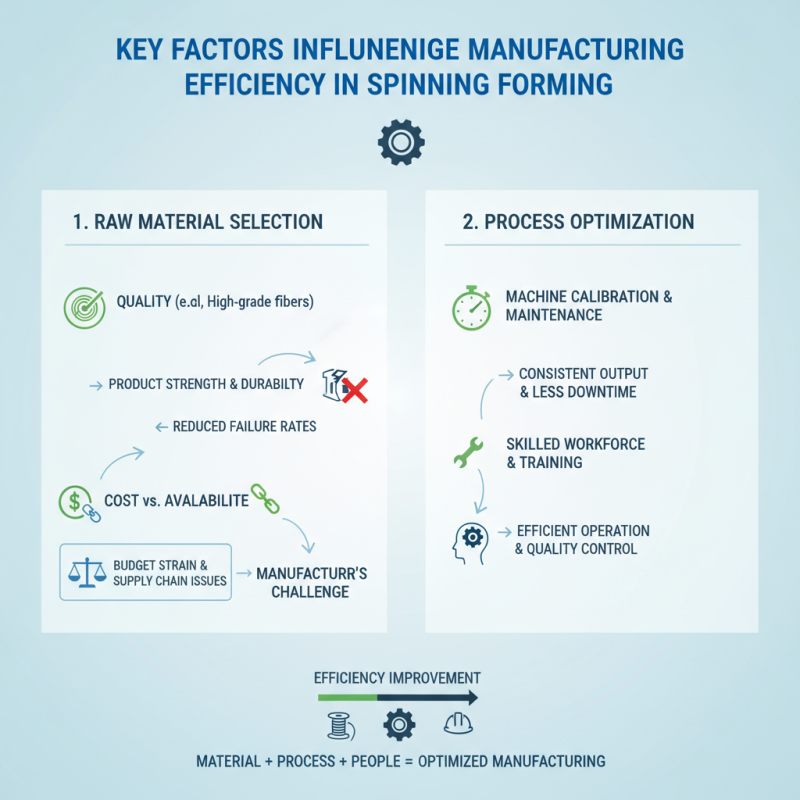
In the realm of spinning forming, several key factors critically influence manufacturing efficiency. One major element is the selection of raw materials. According to industry reports, the quality of materials directly impacts product strength and durability. Using high-grade materials can reduce failure rates in the final products. However, sourcing these materials can strain budgets and lead to supply chain issues. Balancing cost and quality remains a challenge for manufacturers.
Another factor is the spinning process itself. Optimizing parameters, such as speed and temperature, can greatly enhance output quality. Reports suggest that slight adjustments can increase productivity by up to 15%. Yet, this requires extensive testing and may not guarantee universal results across all product lines. Manufacturers often encounter variances in outcomes that demand careful analysis and ongoing adjustments.
Employee training is also vital. Skilled operators can significantly reduce downtime and defects. However, investing in training programs can be costly and time-consuming. Many companies struggle to maintain a consistently trained workforce, which impacts overall efficiency. Continuous evaluation of training effectiveness is essential to ensure that employees remain proficient and adaptable to evolving manufacturing technologies.
Techniques to Optimize Material Utilization in Spinning Processes
Spinning processes are crucial in metal manufacturing.
Optimizing material utilization can significantly improve efficiency.
Recent studies reveal that up to 30% of materials can be wasted during conventional spinning.
This inefficiency impacts costs and sustainability. By implementing precise process controls and advanced simulation technologies,
manufacturers can reduce waste substantially.
To enhance material utilization, consider using advanced modeling techniques.
Finite element analysis can help predict material flow, enabling better die design.
Careful selection of spinning conditions, including spindle speed and feed rate, can make a difference.
Research from the International Journal of Advanced Manufacturing Technology shows that
appropriate adjustments can increase material efficiency by over 20%.
Tips: Regularly analyze the production data.
This helps identify areas for improvement. Train staff on the latest technologies.
Engagement is key for successful implementation. Always review and refine processes,
as even small changes can yield significant returns.
Implementing Advanced Technologies for Enhanced Spinning Performance
The spinning forming process plays a crucial role in manufacturing efficiency. Implementing advanced technologies can significantly enhance spinning performance. One such technology is automation, which streamlines operations. Automation reduces manual errors and speeds up production, but it requires skilled operators for maintenance.
Incorporating AI and data analytics can optimize the spinning process. These tools analyze patterns and predict issues before they arise. However, the integration can be complex and needs careful planning. Teams must be trained to utilize these tools effectively. Data security is also a concern that cannot be overlooked.
Energy-efficient machinery is another focus area. It reduces operational costs and environmental impact but may have a higher initial investment. Companies must evaluate their long-term gains while considering these technologies. Continuous reflection on these processes can lead to better decision-making and improved outcomes in the spinning forming industry.
2026 How to Optimize the Spinning Forming Process for Manufacturing Efficiency? - Implementing Advanced Technologies for Enhanced Spinning Performance
| Technology |
Efficiency Improvement (%) |
Cost Reduction (%) |
Implementation Time (Months) |
| Automated Control Systems |
15 |
10 |
6 |
| IoT Sensors |
20 |
15 |
8 |
| Advanced Materials |
25 |
5 |
12 |
| Real-time Data Analytics |
18 |
12 |
4 |
| Predictive Maintenance |
22 |
8 |
10 |
Measuring and Analyzing Efficiency Metrics in Spinning Forming Operations
In spinning forming operations, measuring efficiency is key to maximizing output. Metrics such as cycle time, material yield, and energy consumption can provide insights. By focusing on these areas, manufacturers can identify inefficiencies. For example, longer cycle times can indicate machine wear or misalignment. Regular maintenance checks can mitigate these issues.
Analyzing efficiency metrics involves collecting data and evaluating trends. Simple tools like spreadsheets or dedicated software can facilitate this process. Visualizing data through graphs helps in identifying patterns. Are machines often running at lower speeds? That could signal a need for operator training or equipment upgrades. Redundant processes may also emerge during analysis.
Reflecting on efficiency metrics can unveil unexpected challenges. Perhaps teams feel overworked yet the output does not match their effort. Engaging operators in these discussions can yield valuable insights. It’s essential to adjust strategies based on real feedback. Manufacturing efficiency is not merely about technology; it’s also about people.