Why Choose Tube Spinning for Your Manufacturing Needs?
Tube Spinning is emerging as a preferred method for manufacturers seeking precision and efficiency. According to Dr. Emily Parker, an expert in manufacturing technologies, "Tube Spinning redefines how we shape metal." Her insight underscores the advantages this technique offers.
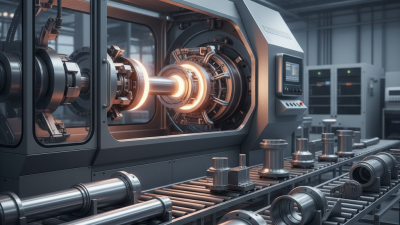
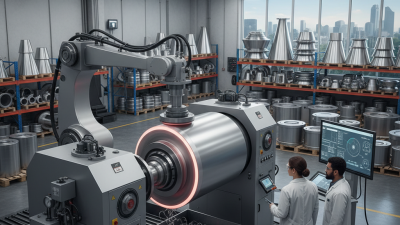
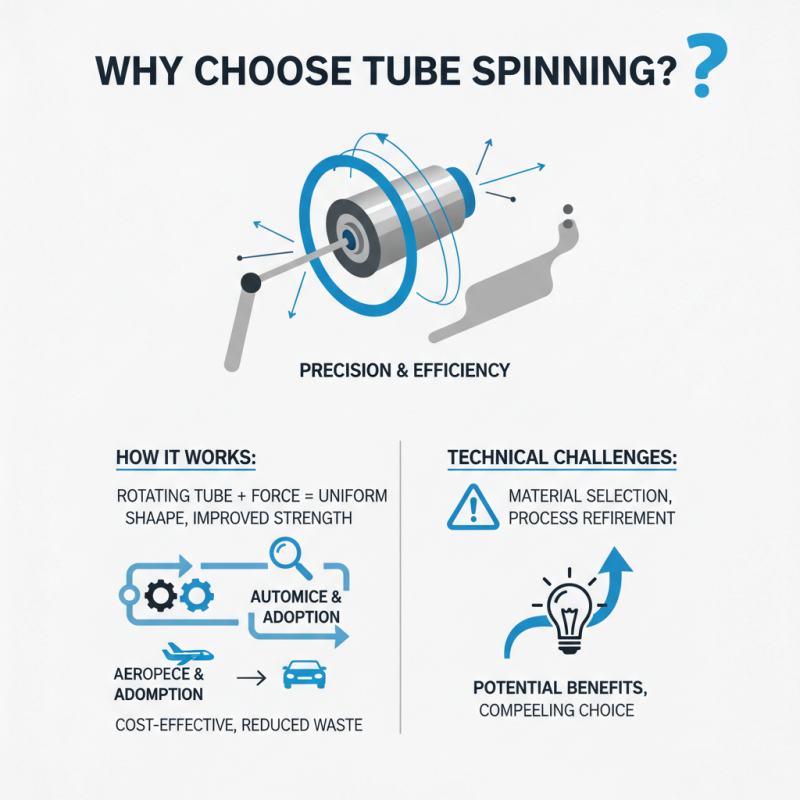
This innovative process involves rotating a tube at high speeds while applying force. The result is a uniformly shaped product with improved strength and durability. Industries such as aerospace and automotive are increasingly adopting Tube Spinning. They appreciate the cost-effectiveness and reduced waste compared to traditional methods.
However, one must consider the technical challenges associated with Tube Spinning. Not all metals respond equally well to this technique. Manufacturers must carefully select materials to avoid imperfections. Continuous refinement of processes is essential for achieving optimal results. Despite the learning curve, the potential benefits make Tube Spinning a compelling choice for modern manufacturing needs.
Overview of Tube Spinning and Its Applications
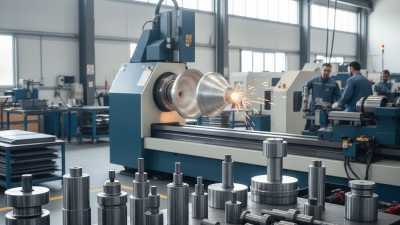
Tube spinning is a versatile manufacturing process used in various industries. It involves shaping a tube from a metal sheet through rotational forces. The principle is simple yet effective. As the tube rotates, it is shaped by tools, typically made of hard materials. This method offers excellent precision and uniformity.
Applications of tube spinning span numerous sectors. For instance, it is commonly used in aerospace for crafting fuel tanks and structural components. The automotive industry benefits from tube spinning for exhaust systems and chassis components. However, not every design can be executed perfectly with this technique. Complex shapes may require additional processes.
Despite its advantages, tube spinning has limitations. The initial setup can be time-consuming. Adjustments might be necessary for specific designs. It’s essential to weigh the pros and cons before selecting this method. Understanding the requirements of your project is crucial for optimizing production. Each application must consider material properties and tooling capabilities.
Why Choose Tube Spinning for Your Manufacturing Needs?
The bar chart above illustrates the key advantages of tube spinning in manufacturing processes. It highlights attributes such as cost efficiency, precision, production speed, flexibility, and material usage—each contributing significantly to why manufacturers opt for tube spinning over other methods.
Advantages of Tube Spinning in Manufacturing Processes
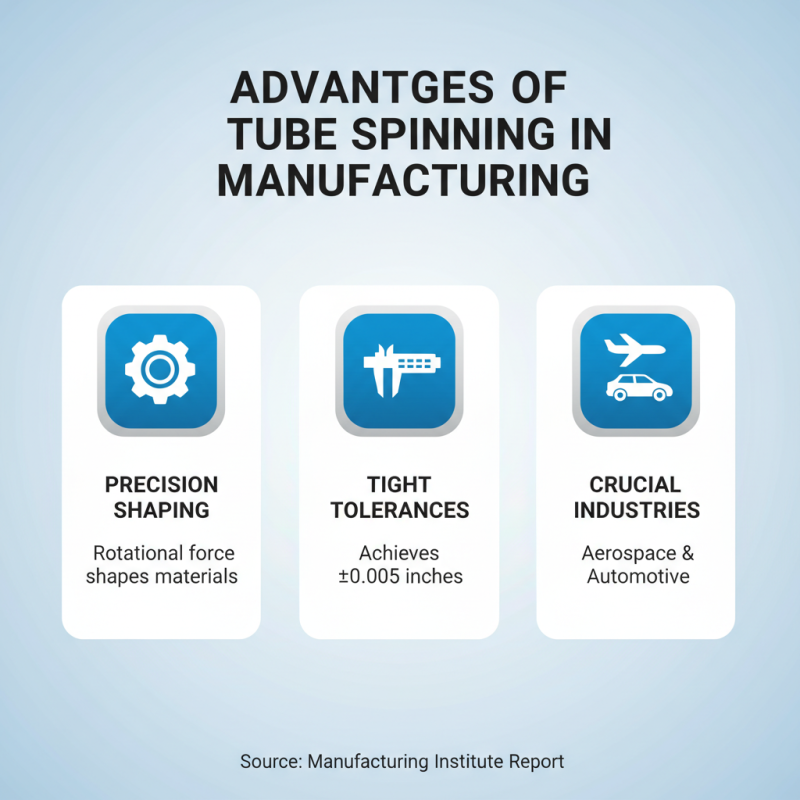
Tube spinning presents a unique advantage in manufacturing processes. This technique allows the shaping of materials through rotational force, often resulting in better precision and consistency. According to a report from the Manufacturing Institute, tube spinning can achieve tolerance levels within ±0.005 inches. This level of precision is crucial for industries like aerospace and automotive, where safety and performance depend on exact specifications.
One of the significant benefits of tube spinning is its material efficiency. This method minimizes waste compared to conventional machining, which can generate up to 40% scrap material. By reducing waste, manufacturers can lower costs and enhance sustainability efforts. Some studies show that companies adopting tube spinning witness a 30% reduction in material costs.
**Tip:** When considering tube spinning, assess your design’s complexity. Simpler designs often yield better results. Additionally, regular machinery maintenance is essential for maintaining precision.
However, not all shapes are viable for tube spinning. Complex geometries may require additional setups, increasing production time. Manufacturers should weigh the nature of their projects against tube spinning’s capabilities to determine the best fit. This reflection ensures optimal use of this efficient technique.
Comparison of Tube Spinning with Other Fabrication Methods
Tube spinning stands out as a highly effective fabrication method compared to other techniques like welding or machining. In tube spinning, material is formed into shape as it is spun against a tool. This process reduces waste significantly, boasting an efficiency rate of around 90% in material utilization. In contrast, machining can result in 30-50% waste, which raises production costs and environmental concerns.
Moreover, tube spinning enhances strength and durability. The process aligns the grain structure of the material, yielding stronger components. According to a report by the American Society of Mechanical Engineers, tube-spun parts can withstand more stress than those produced through welding or traditional bending methods. This quality is crucial in industries such as aerospace, where component reliability is paramount.
However, tube spinning is not without challenges. The learning curve can be steep, and not all materials are suitable for this technique. Additionally, initial setup costs may be higher than simpler methods. Companies must weigh these factors against long-term benefits. Understanding the trade-offs is vital for manufacturers aiming to optimize their fabrication processes.
Key Industries Benefiting from Tube Spinning Technology
Tube spinning technology is gaining traction across various industries. Its unique ability to shape metal tubes into complex designs makes it invaluable. Industries such as aerospace, automotive, and energy are leading the way in adopting this process.
In aerospace, tube spinning produces lightweight yet strong components. These qualities enhance aircraft performance and fuel efficiency. Automotive manufacturers benefit similarly, creating parts that improve vehicle safety and aesthetics. In energy, effective tube shaping supports renewable energy projects, particularly in wind and solar technologies.
Tips: Consider materials carefully. Different metals yield various results. Testing prototypes can reveal potential issues before full production.
The versatility of tube spinning allows customization. However, not every design may work perfectly. Analyzing past projects helps identify mistakes and avoid repeating them. Balancing innovation with practicality is essential in this evolving field.