Leave Your Message

China Best Fan Flanging Machine Manufacturer and Price?

Choosing the best Fan Flanging Machine manufacturer in China involves more than comparing headline prices. Buyers need to assess forming accuracy, machine stability, tooling options, and after-sales support. The International Energy Agency’s 2018 report, The Future of Cooling, projects that global energy demand for space cooling could more than triple by 2050. This forecast describes cooling demand, not machine sales. Still, it signals why dependable fan-component production matters.

A Fan Flanging Machine forms edges on sheet-metal fan parts, helping components fit consistently during assembly. Small details matter. Uneven flanges can complicate fitting, while suitable tooling and controlled forming help maintain repeatable results. Ask manufacturers about compatible material thickness, flange dimensions, production speed, and quality checks. Request a sample run using your own material, if possible. A polished brochure cannot replace that evidence.

Price depends on machine capacity, customization, dies, automation, and service arrangements. Compare itemized quotations, not just the base-machine figure. Confirm what installation, operator training, spare parts, and warranty coverage include. Manufacturer experience can be checked through factory references, technical documentation, and clear answers about tolerances. These checks do not guarantee a perfect purchase. They make the decision more informed. The “best” supplier is rarely the one with the lowest quote alone; it is the one whose machine and support fit your actual production needs. That judgment takes work.
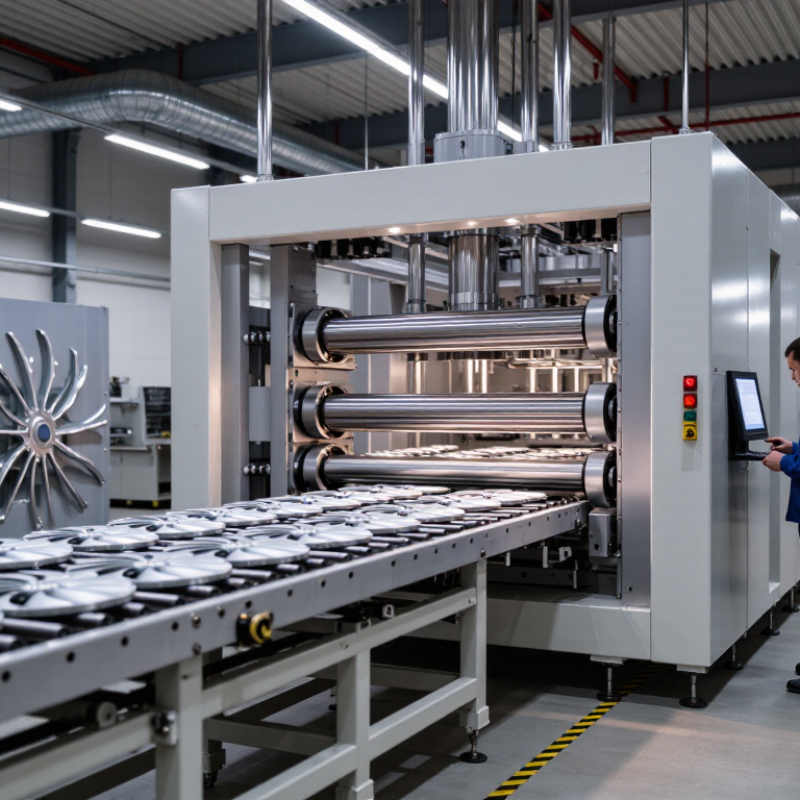
China Best Fan Flanging Machine Manufacturer and Price?

What Is a Fan Flanging Machine and How Does It Work?

A fan flanging machine shapes the edge of sheet metal used in fan housings, ducts, and inlet or outlet sections. The formed rim can stiffen a panel or create a surface for joining another part. A clean edge matters.

Depending on the machine, the workpiece is held in a fixture or rotated while forming rollers press its edge against a die. The operator sets the flange width, forming depth, and tool position to match the drawing. Some machines use manual controls; others automate feeding and forming.

The process starts with a cut, deburred workpiece. The operator aligns it, secures it, and makes a gradual forming pass. Too much pressure can wrinkle thin sheet or distort a circular opening; too little may leave an uneven flange.

Small details matter. Material type and thickness affect tool choice and settings, so test pieces are useful before a production run.

In practice, setup can be less tidy than a diagram suggests. A slightly uneven blank may still produce a poor edge, even when the machine settings look correct. Inspecting the flange around its full circumference helps catch gaps, cracks, and changes in width.
Key Features and Applications of Fan Flanging Machines

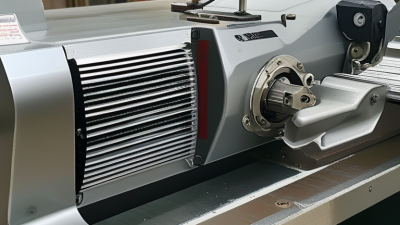
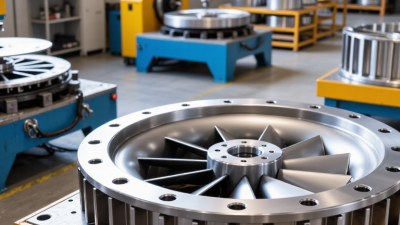
A fan flanging machine forms a turned or raised edge on sheet-metal fan housings, rings, and duct transitions. This edge can stiffen thin panels and provide a more consistent surface for joining. Depending on the design, forming uses rollers or matched dies, with adjustments for feed speed, tool position, and workpiece rotation. Setup should account for material type, sheet thickness, component diameter, and flange profile. Fit matters.

Typical applications include axial and centrifugal fan casings, ventilation components, and HVAC duct parts. A repeatable flange helps align sections for welding, riveting, or bolted assembly. Adjustable tooling can handle different sizes, while clear controls and guarded moving parts support practical shop-floor operation. Inspect edges for waviness, cracks, and uneven height, particularly near seams. Small flaws travel.

When comparing machines, check the working diameter range, forming capacity, tooling change time, and availability of technical support. These details affect both production suitability and overall cost; a quoted price alone says little about long-term value. A faster cycle is not always better. Aggressive forming can distort thin panels, and real-world setup may take longer than expected, so trial parts are worth evaluating before full production.

How to Evaluate Fan Flanging Machine Manufacturers in China

China Best Fan Flanging Machine Manufacturer and Price?

How to Evaluate Fan Flanging Machine Manufacturers in China

Choosing a fan flanging machine manufacturer takes more than comparing prices. Ask how the machine handles your actual sheet thickness, flange diameter, and production speed. Request a trial using your own material. Watch the finished flange for uneven edges, wrinkles, and inconsistent dimensions. Small details matter. Check whether the quotation includes tooling, installation, operator training, and spare parts. A low initial price can leave important costs unclear.

Review the manufacturer’s quality records, but treat certificates as a starting point. The ISO Survey 2022 recorded 1,265,216 valid ISO 9001 certificates worldwide; certification reflects a quality-management system, not a guarantee of machine performance. Ask for inspection records, a written acceptance test, and clear tolerances for repeatability. Confirm who will provide technical support, and how quickly common wear parts can be supplied. I would still hesitate if a supplier shares polished videos but avoids a live test. One visit may not reveal everything, either. Compare several written offers, and check that each covers the same machine configuration before judging the price.

Factors That Affect Fan Flanging Machine Prices

Factors That Affect Fan Flanging Machine Prices

Fan flanging machine prices vary with workpiece diameter, sheet thickness, and required output. A machine forming thin aluminium rings needs less force than one handling thick steel housings. The World Steel Association reported 1.882 billion tonnes of crude steel production in 2024. This figure is not a machine-price benchmark, but it highlights why material grade and thickness matter when specifying equipment. Tooling, changeover time, and the number of fan sizes also affect the final configuration.

Automation can raise the purchase price while reducing repetitive manual work. The International Federation of Robotics reported 541,302 industrial robot installations worldwide in 2023. That statistic covers all industrial robots, not flanging machines specifically, but it reflects broad investment in automation. For a flanging line, programmable controls, automatic loading, and inspection options add cost. So do motor power, frame rigidity, guarding, installation, and operator training. A low quote can still be the wrong buy. I would compare the same workpiece, cycle time, and included tooling across supplier quotations.

Tips: Ask for a trial using your actual fan housing material and dimensions. Check what the quote includes: dies, commissioning, spare parts, and warranty. Small omissions matter. Record expected daily output before choosing automation; otherwise, extra features may sit unused.

China Best Fan Flanging Machine Manufacturer and Price? - Factors That Affect Fan Flanging Machine Prices

Price Factor Lower-Cost Configuration Higher-Cost Configuration Indicative Price Impact (USD)
Machine type and automation Manual or basic semi-automatic machine; operator handles loading and positioning. Hydraulic or CNC-controlled machine with automated positioning and a programmable process. $3,000–$10,000 vs. $15,000–$50,000+
Workpiece diameter Designed for smaller fan housings, such as parts up to approximately 600 mm in diameter. Built for larger housings, for example parts around 1,200–1,500 mm in diameter. Larger capacity may add $3,000–$15,000+
Sheet thickness and material Light-gauge steel or aluminum, with capacity around 0.5–1.0 mm depending on material and tooling. Thicker sheet or more demanding materials, requiring greater forming force and a reinforced frame. Higher-capacity construction may add $2,000–$10,000+
Tooling and profile range One standard roller or die set for a common flange profile. Multiple interchangeable tooling sets for different diameters, flange widths, or profiles. Additional tooling: approximately $500–$3,000+ per set
Control system and positioning Manual controls with mechanical stops and basic adjustment. PLC or CNC controls, digital settings, and repeatable positioning for varied production batches. Automation upgrade may add $2,000–$12,000+
Production rate and duty cycle Intermittent operation for small batches or lower daily output. Heavy-duty components and a design suited to longer shifts or higher production volumes. Heavy-duty design may add $2,000–$8,000+
Safety and electrical configuration Standard guarding and electrical setup for the destination market. Additional guards, interlocks, emergency stops, or electrical options required for a specific site. Options may add $300–$2,500+
Installation, shipping, and commissioning Ex-works or factory pickup; buyer arranges freight and setup. Export packing, international freight, on-site installation, training, or commissioning included. Quoted separately; destination and service scope affect cost

Indicative equipment ranges are planning estimates in USD, not a supplier quotation. Actual prices depend on machine specifications, tooling, order quantity, customization, payment terms, and delivery destination. Confirm the supported diameter, material, thickness, flange profile, and included tooling before comparing quotations. Freight, taxes, installation, and commissioning may be excluded.

How to Choose the Right Machine for Your Production Needs

Choosing a fan flanging machine starts with the parts you actually make. List the fan diameters, sheet thicknesses, flange height, and materials you run, then compare them with the machine’s working range. Estimate daily output and changeover frequency too. A machine that handles one large batch well may slow production when operators frequently switch sizes. Deloitte’s 2024 Smart Manufacturing Survey found that 92% of surveyed manufacturers expect smart manufacturing to drive competitiveness within three years. That supports considering controls and production data, but it does not mean every shop needs automation. One uncomfortable point: a faster cycle is not automatically a better line.

Compare the total cost, not just the quoted purchase price. Include tooling, installation, operator training, maintenance, and expected downtime. Ask suppliers to flange sample panels made from your own material; inspect the edge, roundness, and consistency across several pieces. Record setup time and finished-part rejection rates during the trial. A tidy demonstration is useful, but real production conditions can be less forgiving. Check what support and spare parts are available before committing.

Tips: Bring two or three representative workpieces to a machine trial. Ask for a written quote that separates tooling, commissioning, and optional controls. If your production forecast is uncertain, avoid paying for capacity you cannot yet use.