Leave Your Message
Choosing the right Flanging Machines manufacturer can shape production quality, delivery stability, and long-term operating costs. Global buyers often compare suppliers by machine design, forming accuracy, material compatibility, and after-sales support. A polished website is not enough. Factory evidence matters more.
This guide examines leading manufacturers through practical purchasing criteria. These include machine capacity, flange diameter range, steel thickness limits, automation options, and control-system reliability. Buyers should also review factory experience, inspection procedures, spare-parts availability, and training services. A dependable supplier can explain how its machines perform on stainless steel, carbon steel, or specialized alloys. It should also provide clear drawings, test records, and realistic production data.
Small details reveal much. Ask whether the machine includes tooling for your required diameter. Confirm how operators adjust forming pressure and alignment. Check the service response time across different regions. A video test using similar materials can be more useful than a broad sales promise.
No shortlist is perfect. Manufacturer rankings may change with project size, budget, and technical needs. That matters. Some established suppliers offer strong engineering but slower customization. Smaller factories may respond faster, yet provide fewer overseas references. Buyers must verify claims independently through audits, sample production, customer feedback, and documented specifications. The strongest choice is not always the cheapest machine. It is the supplier that combines consistent performance, transparent communication, and support after installation. This article offers a practical starting point for comparing Flanging Machines manufacturers serving international markets.
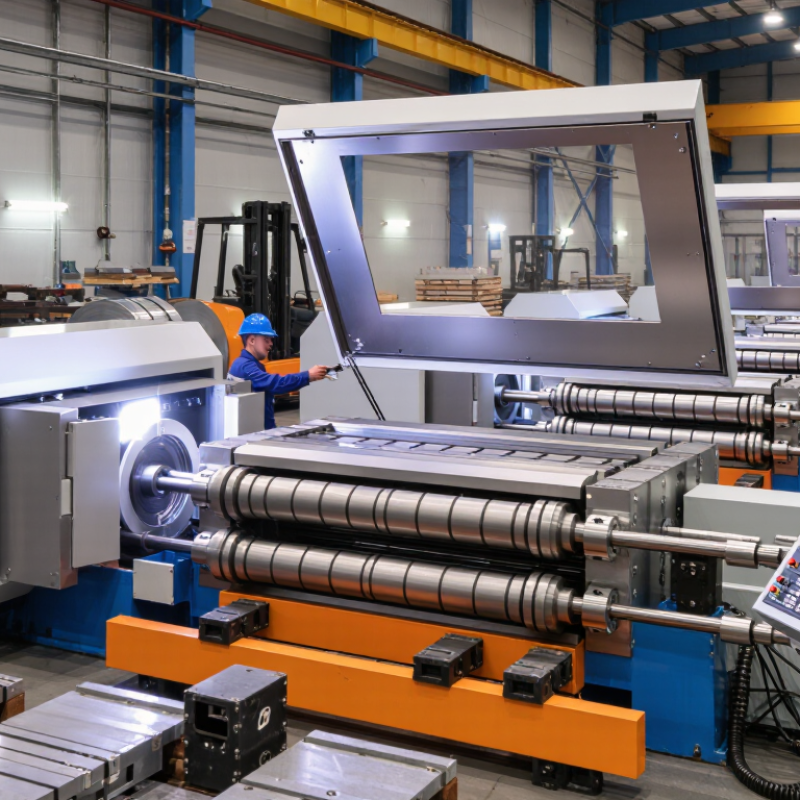
Global buyers should match a flanging machine to diameter, wall thickness, material, and production rhythm. Manual machines suit repair shops and low-volume carbon-steel work. Hydraulic models handle larger shells, thicker plates, and repeatable pressure. CNC orbital machines improve consistency on stainless steel, aluminum, and high-alloy components. Cold flanging is common for ductile metals and controlled thicknesses. Hot forming helps when thick or difficult materials resist deformation. Machining may still be necessary for precise sealing edges.
Capacity descriptions need careful reading. A machine rated for 1,200 millimeters may not accept every 1,200-millimeter shell. The maximum diameter, minimum diameter, plate thickness, flange height, and material yield strength work together. A practical buyer should request trial forming records, dimensional tolerances, cycle time, and energy consumption. Ask for measured results, not attractive brochures.
The World Steel Association’s 2024 Short Range Outlook placed global steel demand above 1.7 billion tonnes, supporting continued demand for fabricated vessels, ducts, and process equipment. The International Energy Agency reported global electrolyzer capacity reached about 1.4 gigawatts by the end of 2023, increasing interest in precision metal fabrication for energy projects. These figures do not directly predict flanging-machine sales. That distinction matters. A polished forecast can still mislead. On-site testing, operator experience, tooling access, and after-sales training often matter more than nominal tonnage. Safety interlocks and documented forming procedures should also be checked against the buyer’s applicable standards.
| Machine Type | Primary Forming Method | Typical Workpiece Diameter | Typical Material Thickness | Typical Capacity | Best-Suited Applications | Key Buying Considerations |
|---|---|---|---|---|---|---|
| Manual Bench Flanging Machine | Hand-operated roller or lever forming | Up to approximately 600 mm | Approximately 0.5–1.5 mm mild steel; thinner non-ferrous sheet may also be processed | Low-volume production and repair work | Small ducts, covers, trim rings, light containers, and maintenance parts | Low purchase cost, simple operation, limited repeatability, and dependence on operator skill |
| Pneumatic Flanging Machine | Pneumatic ram or rotary tool pressure | Approximately 200–1,200 mm | Approximately 0.8–2.5 mm mild steel, depending on tooling and air pressure | Light- to medium-duty repetitive forming | HVAC ductwork, ventilation components, circular covers, and sheet-metal assemblies | Required air pressure, air consumption, tooling life, noise, and cycle consistency |
| Hydraulic Flanging Machine | Hydraulic press forming with controlled ram force | Approximately 500–3,000 mm | Approximately 2–8 mm carbon steel; greater thickness requires project-specific tooling | Medium- to heavy-duty forming | Pressure vessels, tanks, large duct sections, industrial shells, and heavy fabricated parts | Rated tonnage, daylight, stroke, die design, hydraulic maintenance, and foundation requirements |
| Mechanical Rotary Flanging Machine | Rotating rollers progressively bend the edge | Approximately 300–2,500 mm | Approximately 0.8–4 mm mild steel, stainless steel, or aluminum | Medium- to high-volume circular forming | Circular duct ends, drums, tanks, silencer shells, and rolled sheet components | Roll diameter, motor power, forming speed, minimum flange radius, and changeover time |
| Servo-Electric Flanging Machine | Programmable servo-driven roller or press forming | Approximately 200–2,000 mm | Approximately 0.6–3 mm, subject to material grade and tool geometry | High-repeatability production with frequent part changes | Automotive components, appliance parts, precision enclosures, and contract manufacturing | Positioning accuracy, recipe storage, energy consumption, control-system support, and automation compatibility |
| CNC Flanging Machine | Computer-controlled multi-axis forming with programmable tooling | Approximately 300–3,000 mm | Approximately 0.8–6 mm, depending on machine force and material | Complex profiles, repeat orders, and mixed-batch production | Precision ducting, aerospace subcomponents, industrial housings, and customized circular parts | Axis travel, software functions, simulation capability, tolerance control, and operator training |
| Edge-Flanging Machine for Dished Ends | Rotary or press forming around the perimeter of a formed head | Approximately 500–4,000 mm | Approximately 3–16 mm carbon steel or stainless steel, subject to forming radius | Large-diameter heavy fabrication | Pressure-vessel heads, storage tanks, boilers, heat exchangers, and process equipment | Maximum head diameter, plate thickness, forming force, edge geometry, and applicable vessel standards |
| Duct Flanging and Lock-Forming Line | Automated roll forming, beading, flanging, and corner preparation | Rectangular duct panels; commonly processed from about 200 × 200 mm to 2,000 × 2,000 mm | Approximately 0.5–1.5 mm galvanized steel or stainless sheet | Continuous HVAC and ventilation production | Commercial buildings, cleanrooms, industrial ventilation, and modular duct systems | Line speed, sheet-width range, seam profile, automatic gauging, and integration with cutting equipment |
Note: Capacity figures are representative industry ranges for preliminary comparison. Actual performance depends on material grade, tensile strength, workpiece geometry, flange width, forming radius, tooling, machine configuration, and required tolerances.