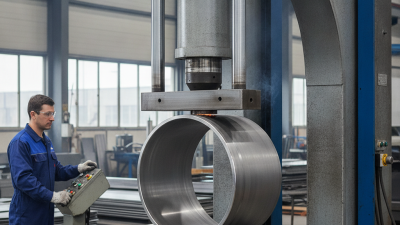
The 2026 market for Flanging Machines is becoming more specialized, yet buyer choices remain surprisingly confusing. Flanging equipment forms, bends, or finishes a rim around sheet metal, pipes, tanks, and ductwork. The right machine can improve joint consistency, reduce rework, and protect production margins.
Industry reports provide useful context, although they rarely classify flanging machines as a separate category. Grand View Research and MarketsandMarkets place this equipment within broader sheet metal fabrication, metal forming, and machine tool markets. Their findings point toward continued demand for automation, digital controls, energy efficiency, and flexible production. The International Federation of Robotics also reports sustained industrial robot adoption, supporting the shift toward semi-automated and fully automated forming lines.
That trend matters on the factory floor. A manual machine may suit occasional stainless-steel work, while a CNC flanging machine can repeat thousands of rim profiles with tighter control. Consider material thickness, flange diameter, forming speed, tooling changes, and operator access. A machine handling thin aluminum may struggle with heavy carbon steel. Small mistakes here become expensive quickly.
Not every forecast agrees.
Some reports combine unrelated forming technologies, making direct comparisons imperfect. Buyers should therefore verify specifications through trials, reference installations, maintenance records, and independent testing. This guide examines the top Flanging Machines types buyers need to know in 2026, including manual, hydraulic, pneumatic, CNC, and rotary models. It focuses on practical selection rather than impressive brochures. Real production evidence still matters more.
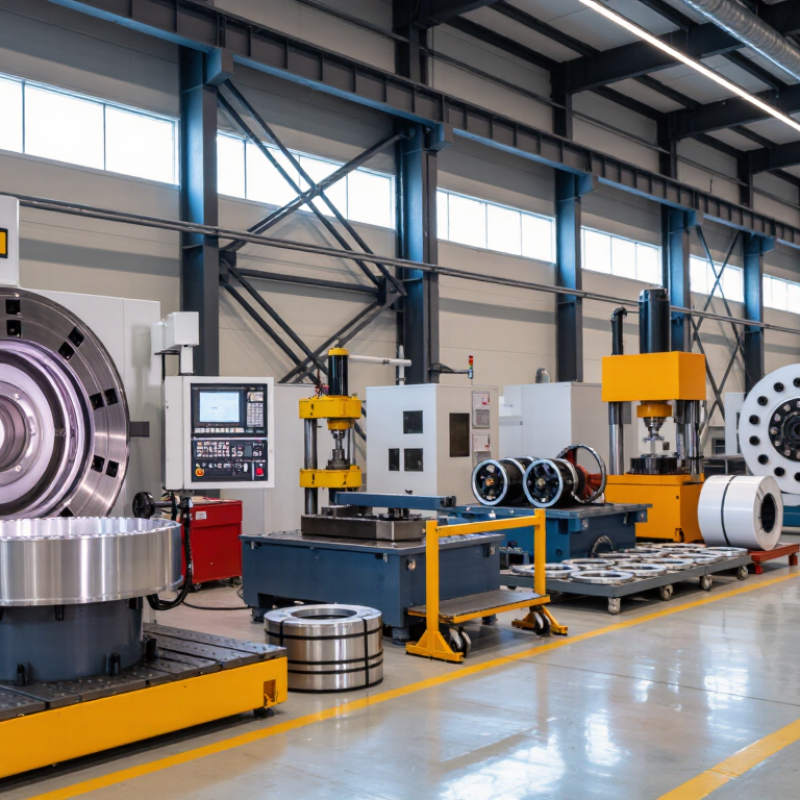
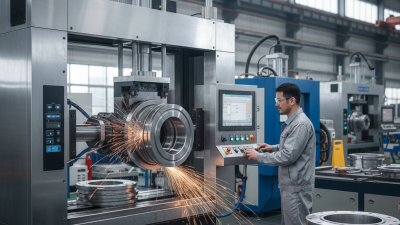
A flanging machine forms a raised, folded, or reinforced edge on a metal part. It is often used for ducts, tanks, pipes, and circular sheet-metal components. In practical fabrication, the machine holds the workpiece against a rotating die or support. A forming roller then presses the metal edge into shape.
As the tool moves, pressure gradually bends the material instead of folding it suddenly. This controlled movement reduces cracking and uneven edges. No heat is usually required. Cold forming is common. Mechanical machines suit repetitive work with stable materials. Hydraulic models provide stronger, adjustable pressure for thicker metal. CNC machines offer accurate paths and repeatable results. Manual units remain useful for repairs, prototypes, and small workshops.
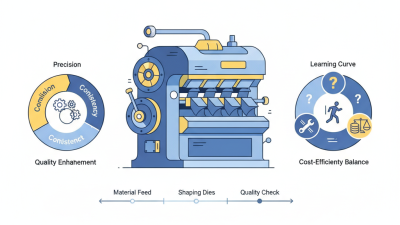
The process starts with correct blank dimensions and clean contact surfaces. The operator checks material thickness, diameter, and the required flange angle. The shell must be centered carefully. Even a small offset can create a wavy edge. During forming, the tool advances in several passes rather than one aggressive movement. Operators monitor noise, vibration, and surface marks. I have seen attractive flanges fail because the inner radius was ignored. That mistake deserves attention. Final inspection should include edge height, angle, roundness, and visible cracks. Records of successful settings can improve future production, although they should not replace fresh measurements.
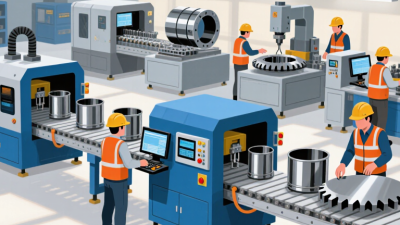
2026 Top Flanging Machines Types Buyers Need to Know?
Flanging machines differ by forming method, material thickness, and required accuracy. Manual and mechanical models suit small workshops, repair work, and low-volume production. Hydraulic flanging machines deliver higher force for pressure vessels, large ducts, and thick steel shells. Their steady pressure helps reduce uneven edges and surface cracking.
CNC flanging machines provide programmed movement, repeatable angles, and faster changeovers. They are useful when manufacturers produce many diameters or complex profiles. Roll flanging machines form continuous circular edges with controlled rollers. Spinning or orbital systems can shape thin metal with less tooling. The right choice depends on blank diameter, flange height, alloy, tolerance, and daily output. “More automation” is not always better.
The International Federation of Robotics reported 541,302 industrial robots were installed worldwide in 2023, a 10% annual increase. This supports the wider move toward automated forming cells, including CNC-assisted flanging. Industry market reports also identify automation, precision, and energy efficiency as major machine-tool purchasing factors. However, report categories often combine several forming technologies, so buyers should avoid treating broad market figures as flanging-specific evidence.
Tips: Request a sample trial before purchase. Measure flange angle, wall thinning, repeatability, and cycle time. Check whether the control system records forming pressure and tool changes. A smaller hydraulic machine may outperform a large CNC unit when production is simple. Tolerance claims deserve verification.
Different flanging machines deliver different results under real production conditions. Manual machines suit low-volume work and thin sheet metal. They cost less and allow direct control. However, output depends heavily on operator skill. Edge consistency can drift after several hours.
Hydraulic flanging machines apply strong, steady pressure across thicker materials. They handle large components with fewer forming passes. Their performance is reliable, but cycle times may increase during tool changes.
CNC flanging machines offer better repeatability through programmed movement and controlled pressure. They are valuable for repeated parts, tight tolerances, and complex profiles. Yet programming time and maintenance can reduce their advantage for short runs.
Rotary flanging machines work quickly on circular edges. They often produce smooth transitions with limited material marking. Their results depend on accurate alignment and suitable tooling.
Buyers should compare more than rated force. Check cycle time, flange height, material thickness, noise, setup effort, and dimensional repeatability. A practical trial can reveal more than a brochure. Run the same steel or aluminum sample through each machine. Measure edge runout at several points. Inspect the flange under bright side lighting. Small waves may appear later.
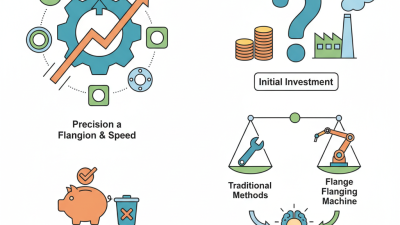
The most expensive option is not always the fastest. A CNC model may remain idle between small orders. A hydraulic model may be excessive for thin duct panels. This is where purchasing decisions become less certain. Production volume, operator experience, tooling access, and future materials should guide the comparison. Performance is useful only when it matches the daily workload.
Choosing a flanging machine starts with the part, not the catalogue. Measure flange diameter, wall thickness, material grade, and required edge radius. A small stainless-steel vessel needs different force control from a thick carbon-steel duct. Record the full production range. Buyers often size machines around average parts, then struggle with oversized orders.
Throughput deserves hard evidence. The 2024 World Robotics report recorded 541,302 new industrial robots installed worldwide in 2023. That figure signals a wider shift toward connected production. If loading or inspection may become automated, check interface options, cycle consistency, and digital fault records before purchase. A fast machine with poor repeatability can create more scrap than value. Ask for test-forming data using your own material.
Energy and safety also affect ownership cost. The U.S. Department of Energy reports that compressed-air systems can consume about 10% of industrial electricity in many plants. Pneumatic clamping should therefore be measured, not casually accepted. Compare motor power, standby consumption, maintenance access, guarding, and emergency-stop design. ISO 12100 offers a practical framework for machinery risk assessment. However, compliance paperwork alone proves little. Watch an operator change tooling with gloves, limited space, and normal production pressure. That test may reveal awkward access, noise, or cleaning problems. I would also leave capacity headroom, but not too much; excessive oversizing raises cost and may reduce process sensitivity.
The figures below are typical industry ranges for common flanging machine configurations. Actual capacity depends on material grade, tooling design, flange geometry, workpiece dimensions, and machine configuration.
| Machine Type | Typical Forming Method | Typical Material Thickness | Typical Workpiece Diameter | Typical Accuracy | Production Capability | Best-Suited Applications | Key Buyer Considerations |
|---|---|---|---|---|---|---|---|
| Manual Flanging Machine | Hand-operated lever, crank, or roller forming | Approximately 0.5–2.0 mm for common sheet metals | Small to medium components, commonly up to about 1,200 mm | Generally around ±0.5–1.0 mm, depending on operator skill | Low-volume and prototype work | Repair shops, maintenance work, samples, and occasional sheet-metal production | Low purchase cost and simple maintenance; slower output and higher dependence on operator skill |
| Mechanical Flanging Machine | Motor-driven eccentric, crank, or mechanical roller system | Approximately 0.8–3.0 mm, depending on machine size and material | Commonly about 300–2,000 mm | Typically around ±0.3–0.8 mm | Medium-volume production with repeatable cycle times | General sheet-metal fabrication, ducts, containers, and standard circular parts | Strong mechanical construction and high cycle speed; adjustment flexibility may be more limited than CNC systems |
| Hydraulic Flanging Machine | Hydraulic cylinder applies controlled forming force | Approximately 1.0–6.0 mm or more with heavy-duty tooling | Medium to large components, often up to about 3,000 mm | Typically around ±0.2–0.6 mm | Medium- to high-volume production and heavier forming work | Pressure vessels, tanks, large ducts, thick rings, and demanding industrial components | High forming force and good control; buyers should assess hydraulic maintenance, energy use, and cycle time |
| CNC Flanging Machine | Computer-controlled servo, hydraulic, or hybrid forming axes | Approximately 0.5–6.0 mm, depending on rated force and tooling | Commonly about 200–3,000 mm | Often around ±0.1–0.3 mm with suitable tooling and calibration | High-volume, high-mix, and repeat-production work | Automotive parts, HVAC components, precision enclosures, and complex flange profiles | Excellent repeatability and recipe storage; higher initial cost requires sufficient production volume to justify investment |
| Rotary Flanging Machine | Rotating rolls progressively form the flange along the workpiece edge | Approximately 0.5–4.0 mm for many standard applications | Small to large circular or curved workpieces, commonly up to about 2,500 mm | Typically around ±0.2–0.6 mm | Efficient continuous or semi-continuous production | Circular covers, drums, tanks, ducting, and rotationally symmetrical components | Fast and comparatively smooth forming; buyers must verify minimum flange width, roll profile, and workpiece access |
| Pneumatic Flanging Machine | Compressed-air cylinder or actuator drives the forming tool | Approximately 0.5–2.5 mm | Small to medium parts, commonly up to about 1,500 mm | Typically around ±0.3–0.8 mm | Light- to medium-duty repetitive operations | Light-gauge enclosures, ventilation parts, appliance components, and assembly-line work | Clean and fast actuation; compressed-air quality, available pressure, noise, and force limitations should be checked |
| Edge Flanging Machine | Dedicated tooling forms a flange along a straight or shaped edge | Approximately 0.5–3.0 mm | Panel lengths commonly from 500–4,000 mm | Typically around ±0.2–0.6 mm | Medium- to high-volume panel production | Cabinet panels, vehicle body parts, HVAC panels, and fabricated housings | High productivity on repeated edge profiles; tooling compatibility and panel handling space are critical |
| Multi-Axis Robotic Flanging Cell | Robot-guided tool or workpiece with programmed forming movement | Approximately 0.8–4.0 mm, depending on process and tooling | Small to large parts, subject to robot reach and payload | Often around ±0.2–0.5 mm after process validation | Automated medium- to high-volume production | Complex geometries, mixed-model production, and operations requiring reduced manual handling | Flexible automation and improved ergonomics; integration, programming, guarding, and operator training add cost |
| Special-Purpose Flanging Line | Integrated blank loading, forming, trimming, inspection, and unloading | Designed for a defined material and thickness range | Configured to the required product family | Process-specific; commonly controlled through fixtures and automated inspection | Very high-volume dedicated production | Large repeat orders with stable product geometry and standardized process steps | Highest automation and throughput potential; least flexible when product designs or order volumes change |
| Important: Before selecting a machine, confirm the required flange height and angle, material type, yield strength, thickness range, workpiece diameter or length, production volume, permissible tolerance, tooling availability, operator skill level, floor space, electrical requirements, safety features, after-sales service, and total cost of ownership. | |||||||
Flanging machines serve industries that need strong, repeatable edges on pipes, ducts, tanks, and vessel openings. HVAC manufacturers use them to form clean duct connections. The finished flange supports gaskets, bolts, and stable airflow. Workshop experience shows that consistent edges can reduce fitting time. Small dimensional errors still create frustrating installation delays.
Pressure vessel and tank fabricators also depend on flanging equipment. They form rims on steel shells, inspection openings, and process vessels. A controlled flange improves joint alignment and can reduce unnecessary welding. Quality teams usually check flange height, angle, surface condition, and material thickness. One overlooked measurement can affect sealing performance.
Automotive exhaust, chemical processing, and food equipment manufacturers use flanging machines for similar reasons. Automotive plants need repeatable pipe ends for exhaust assemblies. Chemical facilities require durable connections around pumps and storage systems. Food equipment makers often prefer smooth, accessible edges that support cleaning routines. Aerospace production may use specialized machines for lightweight alloys and strict tolerances. The detail matters.
The best machine is not always the fastest one. Material behavior, production volume, available tooling, and operator skill all influence the decision. Some buyers focus on automation and later discover difficult maintenance requirements. Others choose a flexible machine but underestimate setup time. A careful trial with actual materials can reveal problems that a brochure cannot.