Leave Your Message

How to Find Top China Metal Spinning Cone Manufacturers?

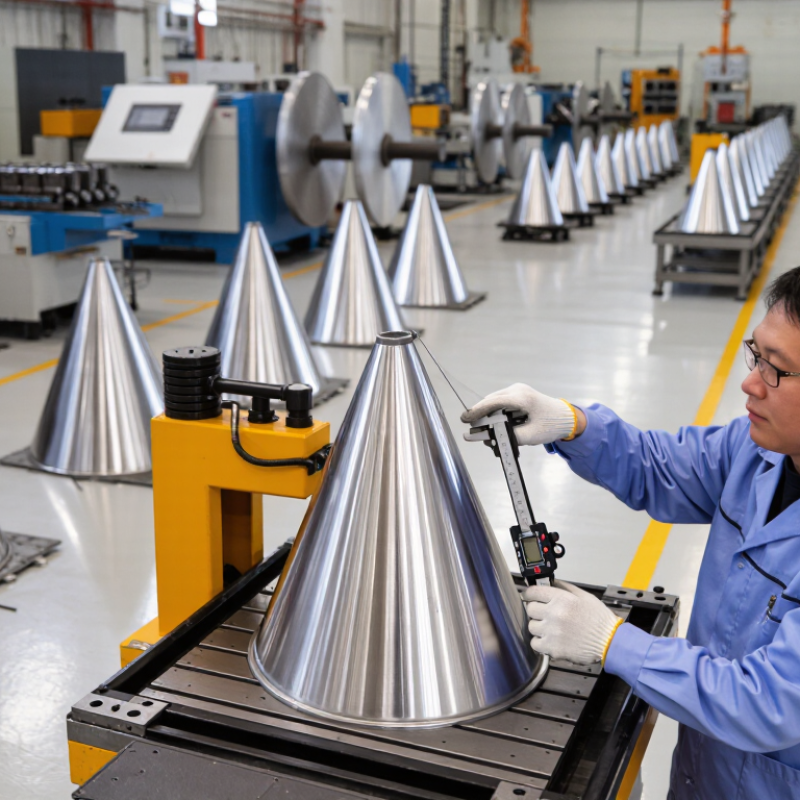
Finding top China Metal Spinning Cone manufacturers requires more than comparing prices and polished websites. Buyers should examine production experience, forming accuracy, material control, and communication quality. A trustworthy supplier should explain its process clearly, from sheet selection and cutting to spinning, trimming, welding, and final inspection. These details reveal whether the factory understands demanding cone applications.

China has many metalworking manufacturers, but their capabilities can differ sharply. Some specialize in decorative parts, while others produce industrial cones for ventilation, lighting, machinery, or pressure-related equipment. Yet appearance can mislead. Real confidence comes from evidence. Ask for recent project photos, dimensional inspection reports, material certificates, and samples with visible measurement points. Confirm whether the factory owns its spinning equipment or relies heavily on outside workshops.

A careful evaluation should also consider tolerances, surface finish, wall thickness, production volume, packaging, and delivery consistency. Small details matter. A capable manufacturer will discuss drawing revisions before production begins. It should also identify risks, such as distortion near the cone opening or uneven thickness after deep forming. No shortlist is perfect. A supplier may provide complete documents and still misunderstand one critical forming detail. That is why sample approval remains essential.

Cost matters, but the lowest quotation may hide weaker inspection or unstable materials. Compare complete offers rather than unit prices alone. Review communication records, factory certifications, quality procedures, and after-sales responses. Reliable manufacturers welcome practical questions and provide traceable answers. By combining technical verification with careful supplier communication, buyers can select a Metal Spinning Cone partner that supports consistent quality, realistic schedules, and long-term cooperation.
How to Find Top China Metal Spinning Cone Manufacturers?

Define Your Metal Spinning Cone Requirements

Before comparing China metal spinning cone manufacturers, define the part precisely. Start with the large and small diameters, height, included angle, and wall thickness. State whether dimensions describe the finished part or the blank. This difference affects material allowance and tooling design. Name the metal grade, temper, and sheet form. Aluminum, stainless steel, and mild steel behave differently during forming. Add the batch size and expected annual demand. Prototype orders may need flexible tooling. Repeated production requires stable, economical tooling.

Describe edge conditions, openings, holes, welds, and joining features. Specify surface expectations, such as brushed, polished, painted, or untreated. Include realistic tolerances for diameter, roundness, height, and thickness. Overly tight tolerances can increase cost without improving performance. Define inspection methods and sampling rules. A reliable manufacturer should explain measurement procedures, not merely promise compliance. Request material certificates, process records, and sample photographs. Traceability matters for safety-sensitive equipment. It protects both sides.

Share a clear drawing, 3D file, application temperature, load, and installation environment. Mention packaging needs, labeling, and delivery destination. These details reveal risks early. In practice, drawings are rarely perfect. Leave room for engineering questions and a first-article review. Ask about forming limits, springback control, tooling ownership, and repair support. A useful quotation should separate tooling, piece price, inspection, and logistics. Do not select on price alone. Test one sample under actual conditions before approving volume production.
Search for Qualified China-Based Manufacturers

How to Find Top China Metal Spinning Cone Manufacturers?

Search for Qualified China-Based Manufacturers

China remains a major manufacturing base for formed metal components. UNIDO reports that China contributed over 30% of global manufacturing value added in recent years. That scale creates opportunity, but not every supplier has metal spinning expertise. Search for manufacturers showing real cone samples, machine photographs, inspection records, and clear material specifications.

Start with manufacturers experienced in aluminum, stainless steel, copper, or carbon steel spinning. Ask about maximum diameter, wall-thickness control, forming depth, and acceptable tolerances. Request a sample drawing review before discussing price. A qualified supplier should explain springback, trimming, welding, and surface-finish risks in practical terms. Vague answers deserve caution.

Verify quality systems independently. ISO 9001 certification is useful, but it does not prove excellent spinning results. Ask for the certificate number, recent inspection reports, material certificates, and traceability records. The International Organization for Standardization reports that ISO 9001 remains the world’s most widely used quality-management standard, with over one million certificates worldwide. Still, paperwork can hide weak process control. Arrange a video audit or factory visit when possible. Check spinning lathes, laser measurement tools, gauges, and packing methods. Compare pilot samples against your drawing, not attractive catalog images. No checklist is perfect. Manufacturing conditions can change between sampling and mass production, so define inspection points, corrective-action procedures, and shipment approval in writing.

How to Find Top China Metal Spinning Cone Manufacturers? - Search for Qualified China-Based Manufacturers
Evaluation Dimension Practical Qualification Data Why It Matters for Metal Spinning Cones Evidence to Request Assessment
Manufacturing Process Metal spinning, flow forming where applicable, CNC trimming, drilling, rolling, welding, polishing, and deburring. A qualified supplier should be able to complete the required cone operations or clearly control approved subcontracted processes. Process flow chart, equipment list, sample production records, and subcontractor control procedure. Required
Supported Materials Commonly processed materials include aluminum, stainless steel, mild steel, galvanized steel, and copper alloys. Material suitability must be confirmed for each drawing. Different materials require different tooling, lubrication, forming forces, heat-treatment controls, and surface-finish methods. Material capability matrix, mill certificates, incoming inspection records, and representative samples. Required
Dimensional Capability Capability should be stated by maximum blank diameter, finished outside diameter, cone height, wall thickness, tolerance, and batch size rather than by a general “large or small” claim. Metal spinning capability depends on the machine, tooling, material, geometry, and required tolerance. Machine specifications, capability chart, dimensional inspection report, and approved production drawing. Verify by Drawing
Wall Thickness Control For conventional spinning, the supplier should document nominal thickness, allowable variation, thinning risk, and inspection locations. Flow-formed parts require a separate thickness-control plan. Cone forming can create localized thinning, especially near transitions, sharp angles, and small radii. Thickness map, cross-section report, ultrasonic or micrometer records, and first-article inspection data. Verify by Drawing
Dimensional Tolerances Use a drawing-specific tolerance standard such as ISO 2768, ISO 286, ASME Y14.5, or an agreed customer specification. General tolerances may not be sufficient for mating diameters, mounting holes, sealing surfaces, or concentric cone assemblies. Signed drawing, tolerance stack-up, CMM report where needed, and inspection plan. Required
Cone Geometry Confirm included angle, half-angle, height, top and base diameters, apex condition, transition radius, concentricity, and runout. These features directly affect fit, balance, airflow, assembly, and the performance of reflector or duct components. Marked-up drawing, profile measurement report, optical comparator or CMM results, and sample approval. Required
Surface Finish Available finishes may include brushed, polished, bead-blasted, anodized, powder-coated, plated, or passivated surfaces, depending on the material. Surface requirements affect corrosion resistance, appearance, cleanability, reflectivity, and downstream assembly. Surface-finish specification, roughness readings in Ra, coating thickness report, and approved limit samples. Verify by Drawing
Material Traceability Production material should be traceable to a heat, batch, or mill certificate when the application requires it. Traceability supports compliance, corrective action, and verification of mechanical or chemical requirements. Mill test certificate, batch labels, material identification procedure, and retention records. Required
Quality Management ISO 9001 certification is a useful baseline for a manufacturing quality system. Certification scope and validity should be checked independently. A documented quality system improves control of purchasing, production, inspection, nonconformities, and corrective actions. Current certificate, certification scope, audit summary, inspection plan, and corrective-action records. Verify Certificate
Industry-Specific Compliance Automotive projects may require IATF 16949; environmental controls may involve ISO 14001; product chemical requirements may involve RoHS or REACH declarations. Compliance depends on the end-use market and should not be assumed from an ISO 9001 certificate alone. Relevant certificates, declarations of conformity, restricted-substance test reports, and customer-specific compliance records. Project Specific
Inspection Equipment Basic equipment may include calipers, micrometers, height gauges, radius gauges, surface roughness testers, and coating-thickness gauges. Complex profiles may require CMM or optical measurement. Inspection equipment must match the tolerances and geometry specified on the drawing. Equipment list, calibration certificates, measurement-system records, and sample inspection reports. Required
Prototyping and Tooling Confirm whether prototype tooling, production tooling, soft tooling, and tool maintenance are handled internally or through controlled partners. Tool design influences repeatability, forming marks, setup time, cost, and the transition from prototype to mass production. Tooling quotation, tool ownership terms, design approval process, maintenance schedule, and trial-run report. Verify Capacity
Production Volume Ask for demonstrated monthly or annual capacity for comparable cone geometries, material grades, and wall thicknesses rather than overall factory capacity. Comparable production history is a stronger indicator than a general capacity statement. Anonymized production records, capacity plan, machine loading data, and lead-time history. Compare Samples
Lead-Time Planning Separate tooling, prototype, first-article, and production lead times. The final schedule should include material procurement, inspection, finishing, packing, and export handling. Metal spinning schedules can be affected by tooling approval, material availability, and secondary operations. Quotation with milestone dates, production schedule, approval checkpoints, and shipment plan. Confirm in Writing
Packaging and Export Readiness Packaging should protect cone edges, finished surfaces, and dimensional features from deformation, scratching, moisture, and corrosion during international transport. Large or thin-walled spun parts can be damaged even when the manufacturing process is acceptable. Packaging specification, photographs of packed goods, carton or crate dimensions, and export documentation sample. Required
Supplier Verification Check the legal business identity, factory address, manufacturing scope, certification validity, export history, and consistency between quotation and factory information. Verification reduces the risk of dealing with an unsuitable trading intermediary or an unqualified production source. Business license details, factory audit, live video verification, certificate validation, and reference project evidence without confidential data. Required
Commercial Terms Compare tooling ownership, minimum order quantity, payment terms, price validity, material-price adjustment rules, warranty terms, and responsibility for nonconforming parts. A low unit price may not represent the lowest total cost if tooling, inspection, rework, or packaging is excluded. Detailed quotation, purchase terms, quality agreement, nonconformance procedure, and total-cost breakdown. Required

Evaluate Manufacturing Capabilities and Equipment

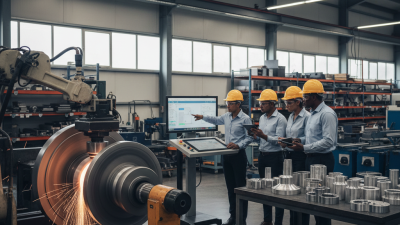
A reliable China metal spinning cone manufacturer should prove its manufacturing capability through equipment, process data, and finished samples. Ask whether the workshop handles manual, CNC, or hybrid spinning. Confirm maximum cone diameter, wall thickness, blank size, material grades, and dimensional tolerance. A large machine is not automatically suitable.

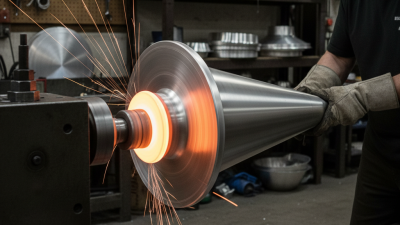
Inspect the equipment directly. Look for rigid spinning lathes, programmable feed systems, forming rollers, hydraulic tailstocks, and dedicated tooling. Check whether tools are maintained and measured regularly. For stainless steel or aluminum cones, controlled forming pressure can reduce wrinkles and uneven thinning. Request thickness maps from sample parts, not only attractive photographs. A polished brochure can still hide weak process control.

Measurement systems matter just as much. The supplier should use calibrated micrometers, height gauges, profile templates, and preferably CMM or optical scanning equipment. The ISO Survey of Certifications 2023 recorded more than one million ISO 9001 certificates worldwide, but certification alone does not prove process control. Ask for inspection plans, material certificates, first-article reports, and batch traceability. The World Robotics 2024 report recorded 541,302 industrial robot installations in 2023, showing wider automation adoption, yet automation cannot replace skilled setup judgment. Arrange a pilot order and compare actual runout, diameter, surface finish, and delivery records. My checklist is useful, not perfect. Some workshops may lack advanced software but still produce excellent parts through experienced technicians. Evaluate evidence, not appearances.

Verify Quality Standards, Samples, and Certifications

How to Find Top China Metal Spinning Cone Manufacturers?

A reliable manufacturer should prove quality through records, not promises. Ask for the quality standard used for each cone, such as ISO 9001 procedures or project-specific specifications. Confirm material grades through mill certificates and check whether heat numbers remain traceable during production. Dimensional reports should show cone diameter, height, wall thickness, and tolerance results. Do not accept a generic inspection sheet.

Samples reveal details that certificates may miss. Request a production sample made with the same metal grade, tooling method, and finishing process. Inspect the cone under bright light. Look for uneven walls, wrinkles, sharp edges, dents, or rough weld areas. Measure several points, not only the opening. A sample can be excellent while mass production changes. This is where many buyers become too confident.

Tips: Compare sample measurements with the approved drawing. Verify certificate numbers with the issuing body when possible. Check calibration dates on measuring equipment. Ask for photos of in-process inspections and packaging protection. A polished certificate folder can still hide weak process control. I have seen buyers focus on surface appearance and overlook wall-thickness variation. That mistake can affect assembly later. Request a small trial order before approving larger quantities. Document every change in writing. Need more evidence? Ask direct questions.

Compare Quotes, Lead Times, and Supplier Support

When sourcing China metal spinning cone manufacturers, do not compare unit prices alone. A credible quote separates the cone body, tooling, finishing, inspection, packaging, and freight. Ask whether the price assumes aluminum, stainless steel, or another material grade. Confirm thickness, diameter, angle, tolerance, and batch size. Request a marked drawing and sample approval plan. Small omissions become expensive later. In practice, the cheapest quote often excludes forming tools or edge trimming. That is not always dishonest, but it needs clarification.

Compare lead times by production stage, not by one final number. Ask for dates covering drawing review, tool fabrication, first article approval, and mass production. A supplier promising ten days may mean production only. A realistic schedule includes material purchasing and dimensional inspection. Request weekly updates and photos of the spun cone, not only a final shipping message. Build a buffer. I once underestimated approval time; the parts were ready, but the drawing revision was not signed. That delay was avoidable.

Supplier support can reveal more than a polished quotation. A technical contact should explain wrinkling, thinning, springback, and tolerance risks. Ask for process records, inspection reports, and corrective action when dimensions drift. Check response speed across several technical questions. Fast replies matter. Test after-sales support with a small pilot order. Reliable suppliers discuss limitations instead of promising every shape. They should confirm export documents and protective packaging clearly. A comparison sheet should record quote validity, payment terms, lead time, support scope, and unresolved questions. Leave space for doubt. One successful sample does not prove stable production.

How to Find Top China Metal Spinning Cone Manufacturers?

Compare anonymized supplier benchmarks across quoted price, production lead time, and supplier support response. Lower values indicate better performance.

When evaluating metal spinning cone manufacturers, compare the complete purchasing picture rather than price alone. A competitive quote should also include a practical lead time, clear technical communication, and prompt support before and after production.