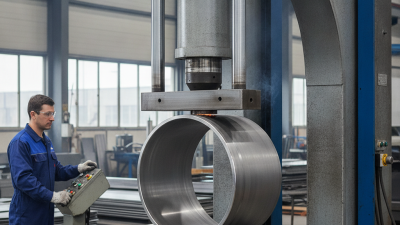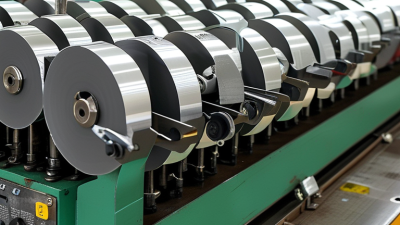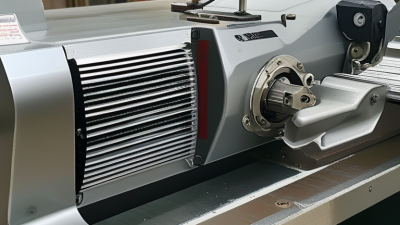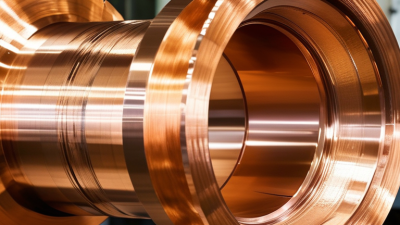
Choosing the right Flanging Machines requires more than comparing prices, tonnage, or catalog photographs. Global buyers must connect machine capability with actual production conditions, including metal type, sheet thickness, flange diameter, forming speed, and required tolerances. A machine shaping stainless steel vessel rims may not suit carbon-steel ductwork. The difference appears at the edge: uneven forming, visible cracking, or a flange that fails inspection.
Industry data supports this broader view. The International Federation of Robotics reported 541,302 industrial robots installed worldwide in 2023, showing how quickly manufacturers are investing in automation and repeatable production. This trend affects flanging equipment selection. Buyers should examine servo control, programmable settings, sensor integration, operator access, and compatibility with existing production lines. UNIDO’s Industrial Development Report 2024 also highlights technology adoption and resilient industrial capacity as important manufacturing priorities. Efficiency matters. Reliability matters more.
However, no universal machine ranking exists. A high-speed model may waste energy in low-volume production, while a compact hydraulic machine may struggle with continuous factory demand. That is where practical verification becomes essential. Request sample forming, dimensional records, maintenance schedules, spare-parts availability, and clear acceptance criteria. Check whether the supplier explains ISO 12100 risk assessment and relevant machine-safety practices. Ask difficult questions. Then ask again.
Experienced buyers should calculate total ownership cost, not only the invoice value. Include tooling, installation, training, downtime, electricity, calibration, and after-sales response. Reported specifications can look impressive, but real performance depends on material handling and operator skill. This guide helps global purchasers compare Flanging Machines with greater confidence, while recognizing one uncomfortable truth: the cheapest decision is rarely the simplest one.
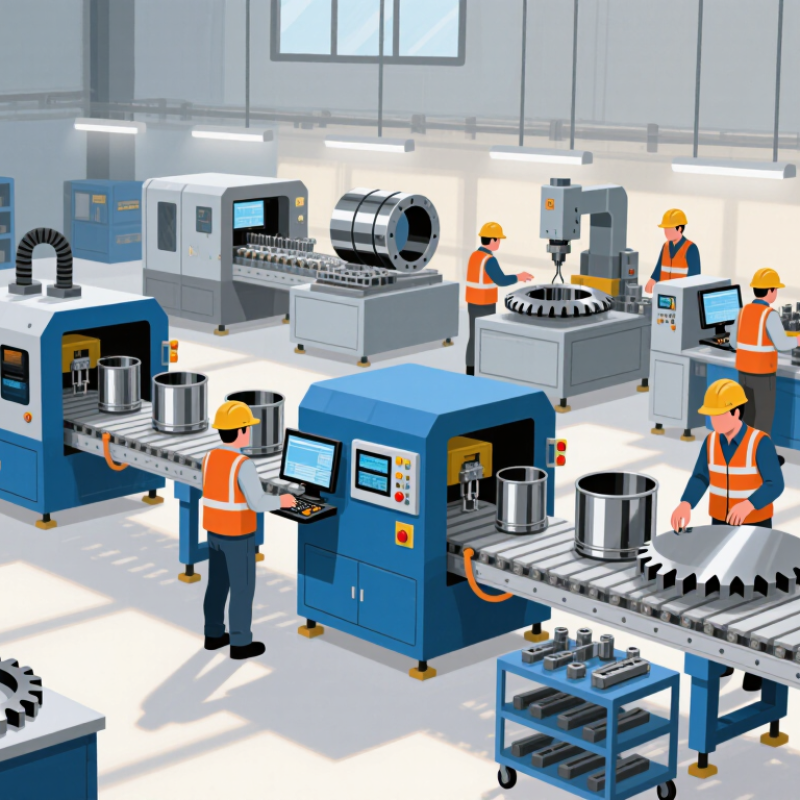
Flanging machines form raised, folded, or reinforced edges on metal parts. They improve stiffness, sealing, and connection accuracy. Common designs include manual, hydraulic, mechanical, and CNC-controlled machines. Manual units suit low-volume ductwork and repair jobs. Hydraulic models handle thicker shells with steadier forming pressure. CNC machines repeat complex profiles with less operator adjustment. The choice depends on material thickness, flange diameter, production volume, and tolerance requirements.
Demand remains connected to broad metal manufacturing activity. The World Steel Association recorded approximately 1.89 billion tonnes of crude steel production in 2023. That volume supports applications in tanks, pressure vessels, exhaust systems, HVAC ducts, and industrial piping. Meanwhile, the International Federation of Robotics reported 541,302 industrial robot installations in 2023. This signals stronger interest in automated loading, forming, and inspection. However, automation should follow a stable process. It should not hide poor tooling or inconsistent blanks.
A practical evaluation starts with the workpiece. Measure its diameter, wall thickness, alloy, and required edge radius. Check whether the machine supports pre-forming, trimming, and repeatable positioning. Ask for sample trials using your actual material. Small differences in springback can change sealing performance. I have found that buyers often overvalue maximum tonnage. That can be a costly mistake. Energy use, tooling changes, guarding, service access, and operator training deserve equal attention. The final decision may still feel imperfect. Real production rarely matches a brochure.
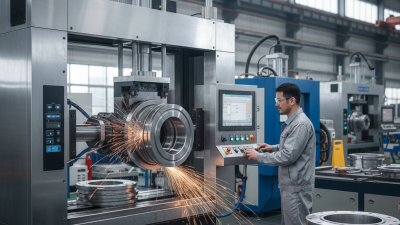
Material selection controls the machine’s forming force, tooling life, and surface quality. Carbon steel needs different dies from stainless steel or aluminum. The 2024 World Steel Association report recorded 1,888.2 million tonnes of crude steel production in 2023, showing the scale of steel processing worldwide. Buyers should confirm tensile strength, yield strength, corrosion resistance, and machinability before comparing machine capacity. Do not rely on material names alone. Two stainless grades can behave very differently.
Diameter and thickness define the working envelope. Measure the smallest and largest flange diameters, including realistic tolerances. A machine rated only for the current order may become a costly limitation. For example, a 6 mm plate can require substantially more forming force than a 3 mm plate, especially with high-strength steel. Check the manufacturer’s force chart, not only its maximum diameter. The 2024 International Stainless Steel Forum statistics reported global stainless crude steel production of about 62 million tonnes in 2023, reinforcing the need for tooling suited to varied grades and thicknesses.
Production requirements also matter. For occasional work, flexible tooling and quick setup may outweigh maximum speed. For continuous production, cycle time, automation, repeatability, and maintenance access deserve closer attention. IEA industry analysis consistently identifies energy efficiency as a major manufacturing priority, so compare motor power with actual forming output. Ask for tested samples. A specification sheet can hide difficult details. In practice, buyers sometimes overestimate future volume and overspend; that mistake deserves honest review.
How to Choose the Best Flanging Machines for Global Buyers?
Machine selection should begin with measurable production needs, not impressive specifications. Compare maximum diameter, material thickness, flange height, and forming force. A machine rated for 6 mm steel may perform differently with stainless steel or aluminum. Request test pieces from your own material. Real trials often expose issues that brochures miss.
Accuracy deserves equal attention. Check repeatability, dimensional tolerance, spindle alignment, and tooling adjustment time. ISO 2768 can support general tolerance discussions, but critical parts may require tighter project-specific controls. The World Robotics 2024 report recorded 541,302 industrial robot installations in 2023. This growth shows automation is becoming practical, yet a fully automated line is not always efficient. For smaller batches, semi-automatic loading may reduce investment and maintenance risks. My experience suggests that cycle-time claims need verification under continuous production, not single-piece testing. That distinction is easy to overlook.
Tips: Compare output per shift, not speed alone. Ask for energy consumption, service response times, spare-part availability, and operator training requirements. Test emergency stops and sensor accuracy during acceptance checks. Keep a sample flange after testing. It becomes useful evidence later. Also, leave capacity headroom of roughly 15–20% for material variation and future orders. This is not a strict rule. Your product mix may prove it wrong. The International Federation of Robotics also reports a global robot density of 162 units per 10,000 manufacturing workers, showing that automation levels vary widely by region. Choose the level your workforce can reliably support.
How to Choose the Best Flanging Machines for Global Buyers?
Supplier quality should be tested beyond polished factory videos. Ask for production records, material traceability, inspection plans, and acceptance-test samples. A reliable supplier can explain flange tolerances, forming pressure, cycle time, and tooling wear in practical terms. ISO’s Survey 2022 recorded more than 1.2 million ISO 9001 certificates worldwide, but certification alone proves limited capability. Check the certificate scope, issuing body, expiry date, and whether it covers machine design or only administration. I have seen impressive certificates attached to weak commissioning processes. That detail deserves scrutiny.
Certifications should match the machine and destination market. Request documented risk assessments, electrical test results, manuals, and applicable conformity evidence. ISO 14001 may indicate structured environmental management, while ISO 45001 can reflect safer workplace procedures. These systems do not replace a factory audit. Inspect weld quality, guarding, control cabinets, lubrication points, and spare-part identification. Small defects become expensive during installation.
Service quality often decides the real purchase cost. The World Bank’s 2023 Logistics Performance Index assesses logistics across 139 economies, including tracking, customs, and timeliness. Buyers should therefore confirm packaging dimensions, shipping documents, remote-support hours, and local service coverage. Require a written response-time commitment, commissioning checklist, training videos, and a two-year spare-parts forecast. Test support before ordering: send a technical question and measure the clarity of the reply. Global support sounds convincing. Actual response speed may disappoint. A video call cannot repair every hydraulic fault, so keep critical parts locally.
| Evaluation Dimension | What Global Buyers Should Check | Relevant Evidence or Standard | Practical Buying Benchmark | Warning Signs |
|---|---|---|---|---|
| Machine Capability | Confirm maximum flanging diameter, sheet thickness, material type, flange height, forming angle, tooling range, and production volume. | Technical datasheet, machine drawings, tooling list, sample-part test, and recorded trial results. | The tested sample should meet the buyer’s dimensional tolerances and surface-quality requirements using the intended material. | Only nominal capacity is provided; no sample test, tolerance data, or material-specific performance evidence. |
| Quality Management | Assess whether design, purchasing, assembly, inspection, and corrective-action processes are controlled and documented. | A valid ISO 9001 certificate issued by an accredited certification body, with a scope covering machinery design or manufacturing where applicable. | Verify certificate number, validity period, issuing body, site address, and certified scope independently. | Certificate belongs to another legal entity, has expired, excludes manufacturing, or cannot be verified. |
| Machine Safety | Review guarding, emergency stops, interlocks, safe access, residual risks, electrical protection, and operator instructions. | Risk assessment based on ISO 12100; electrical documentation aligned with IEC 60204-1 where applicable; safety-circuit test records. | Receive a machine-specific risk assessment, safety checklist, wiring diagrams, and operating manual before shipment. | Generic manuals, missing guarding details, bypassable safety devices, or unsupported claims such as “100% safe.” |
| Regulatory Compliance | Identify the destination market and confirm which machinery, electrical, EMC, import, and workplace-safety rules apply. | For the European market, review the applicable CE conformity documentation, technical file responsibilities, Declaration of Conformity, and applicable harmonized standards. | The supplier clearly identifies the responsible legal entity and provides destination-specific compliance documents before delivery. | A CE mark is shown without a Declaration of Conformity, technical documentation, or explanation of applicable directives. |
| Factory Inspection and Testing | Check incoming-material control, dimensional inspection, assembly checks, software backup, no-load testing, and loaded production testing. | Inspection and Test Plan, calibration records, Factory Acceptance Test report, serial-number traceability, and final inspection checklist. | Use written acceptance criteria covering output quality, cycle performance, safety functions, noise where relevant, and documentation completeness. | Testing is limited to photographs, visual checks, or a short demonstration without recorded results. |
| Warranty and Spare Parts | Clarify warranty duration, covered components, exclusions, labor responsibility, consumables, and spare-part availability. | Signed warranty terms, recommended spare-parts list, parts drawings, component codes, and preventive-maintenance schedule. | Obtain a complete initial spare-parts package and written confirmation of long-term availability for critical components. | Warranty is verbal, excludes major assemblies without definition, or provides no parts identification system. |
| Installation and Commissioning | Confirm foundation, lifting points, utility requirements, electrical supply, lubrication, alignment, trial production, and operator training. | Installation manual, utility drawing, commissioning checklist, training agenda, and signed handover report. | Define whether support is on-site, remote, or provided by a local service partner, including travel and labor costs. | No installation responsibility matrix, unclear site requirements, or training promised only after a problem occurs. |
| After-Sales Response | Evaluate technical communication, troubleshooting process, remote diagnostics, escalation procedures, and service-hour coverage. | Service-level agreement, support contact list, issue-ticket process, remote-access procedure, and anonymized service records. | Set contractual targets, such as acknowledgement within one business day and a defined escalation route for production-stopping faults. | Only a sales contact is available, support hours are undefined, or all technical issues are handled through informal messaging. |
| Global Documentation | Check language, accuracy, revision control, electrical diagrams, software parameters, maintenance instructions, and safety warnings. | Machine manual, parts catalog, wiring diagrams, pneumatic or hydraulic schematics, software backup, and conformity documents. | Documents should match the delivered serial number, machine configuration, voltage, control system, and destination requirements. | Translated documents contain inconsistent specifications or diagrams that do not match the supplied machine. |
| Commercial and Logistics Risk | Review lead time, packaging, insurance, export documents, payment milestones, installation costs, taxes, and delivery responsibilities. | Proforma invoice, agreed Incoterms® rule, packing list, commercial invoice, transport documents, insurance terms, and project schedule. | Link final payment to documented Factory Acceptance Test, shipment documentation, and agreed delivery milestones. | Unclear total landed cost, unsupported delivery promises, or large non-refundable payment before technical approval. |
Note: Certification and regulatory requirements depend on the machine design and destination country. Buyers should verify current local requirements with the relevant authority or a qualified conformity-assessment professional.
Choosing a flanging machine requires more than comparing its purchase price. Calculate landed cost: machine price, inland delivery, export packing, insurance, duties, port fees, and commissioning. UNCTAD’s Review of Maritime Transport 2024 states that over 80% of global merchandise trade by volume moves by sea. Shipping delays can therefore affect production schedules, not just freight budgets. The World Bank’s 2023 Logistics Performance Index also evaluates customs, infrastructure, tracking, and delivery timeliness. These factors deserve a place in your quotation sheet.
Installation details often decide whether a machine creates value. Confirm floor loading, doorway dimensions, power supply, lifting equipment, ventilation, and operator training before payment. Request factory acceptance testing with sample flanges and measurable tolerances. At the site, record installation hours and first-pass production results. Keep critical tooling and electrical spares locally. Small omissions become expensive.
Long-term value needs a five- to ten-year view. Compare energy use, planned maintenance, tooling wear, software support, and technician travel. A lower-cost machine may require more downtime. That difference is easy to miss. A spreadsheet can still lie. Build three scenarios: normal operation, delayed shipping, and heavy maintenance. UNCTAD data confirms maritime dependence, while the World Bank report highlights logistics reliability gaps between markets. In my experience, suppliers who provide clear service response times are often safer choices than those offering the lowest initial price. Some estimates will be imperfect. Review them after six months of real production.